I thought, since it is New Years Eve, I would post a photo gallery of shots from some of the places I’ve been around the world. Sort of a “Best of” gallery from previous posts. I’ve been only blogging since August, so I have yet to post shots from everywhere I’ve been. And, I have yet to even start posting video from all of these places. That is what 2014 is for. Resolution 🙂
The world is a big, beautiful place, filled with interesting people, amazing sights, random coincidences and occasional tender mercies. I have been blessed to travel. I have been blessed to make friends on every continent. I hope to keep the friends I have made and make more as time goes by. However, my greatest blessings are found at home, with a warm fire, a good meal and my family, who love me.
I hope you enjoy the photographs. Happy New Year.
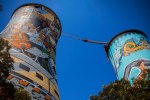
Soweto Towers could be one of the coolest places in the world to bungee and base jump.
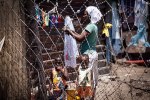
Corregated metal, cardboard, canvas and the ever-present barbed wire makeup the materials of most houses in the township.
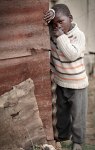
Without education, children growing up in the township face limited opportunities.
The Village Elder gave us permission to take a picture, but, the women of the village, the mothers wouldn’t come out of their huts to be in the shot.
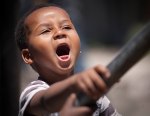
A child can find pure joy amidst the most challenging of circumstances.
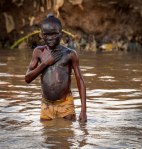
The secret to such smooth, smooth skin could be found in the mud of Lubumbashi River.
Working with root fibers in Yamoransah village, Ghana.
When I tried to take her picture, she would hide her face and then laugh. When I showed her pictures of her friends, she opened up enough to let take this photo.
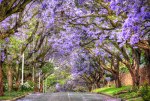
Jacaranda trees bloom in spectacular beauty on a residential street in Johannesburg, South Africa.
The legendary tree of life thrives in Africa.
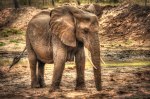
A thirsty African elephant takes a healthy drink from his own personal well.
Leopard finishing a meal of Impala at the Mala Mala Game Reserve, South Africa.
One of the greatest achievements of Roman Engineering and Architecture, the Roman Colosseum is still the largest amphitheater in the world.
Kneeling in the attitude of penitent prayer, this woman remains still for hours, hoping her prayers will be answered with coins in her cup.
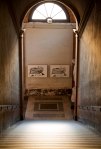
Late afternoon light illuminates a common staircase adjacent to the Scala Sancta (Holy Steps) said to be the steps Jesus stood upon before Pontius Pilate.
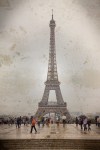
A vintage rainy day in Paris.
KIngs and Courtiers still bask in the lavish extravagance of the Château de Versailles.
Evergreen soldiers await the command to march on the Palace.
One of the islands on the Seine, near the birthplace of Paris.
A woman rests from her burdens.
Can you say Da Vinci Code?
The heart of the ancient Inca Empire
Scones and Smiles, she’ll warm your heart with both.
Shape, pattern, line and light emerge through a high-dynamic-range look into the meadow.
Early morning sun shines on Lone Peak, Wasatch Mountains, Utah.
Temple Square in Salt Lake City is the headquarters of The Church of Jesus Christ of Latter-day Saints. Construction of the Salt Lake Temple began in 1847 and took nearly 40 years to complete. The Temple, surrounded by thousands of twinkling Christmas lights, stands as a symbol of faith and hope to more than 15 million Latter-day Saints (Mormons) across the world.
When Christ was accused of rebellion by the Jewish Sanhedrin, he was sent to Pontius Pilate for judgement. Legend says that he ascended the 28 marble steps leading to Pilate’s Praetorium where Pilate questioned him prior to judgement. Three hundred years later, as Rome was converting to Christianity under the leadership of Emperor Constantine and his zealous mother St. Helena, Helena had the marble steps of the Praetorium extracted and sent to Rome. Tradition says that by ascending the steps on one’s knees, the Scala Sancta, Holy Stairs or Jerusalem Steps, will bring Catholic Pilgrims special blessings, especially on Fridays or during Lent. It was following an ascent of these steps that Martin Luther allegedly experienced a prompting from the Holy Spirit directing him to rely on Faith rather than works. This experience was a turning point in Luther’s life and launched the reformation.
Today, Christian pilgrims still ascend the Jerusalem Steps on their knees, seeking for spiritual insight, divine guidance or, in Catholic Terminology, plenary indulgence–remission of temporal punishment as a result of sin. Interestingly, there is a sign at the base of the Scala Sancta instructing pilgrims that climbing the Holy Steps on bended knees does not substitute for sincere repentance. To receive entrance to the true Holy City, one must ascend the golden steps with a broken heart and contrite spirit.
Legends say that these marble steps once led up to the Praetorium of Pontius Pilate in Jerusalem.
Tradition says that Christ ascended these twenty-eight marble steps to be judged of Pilate.
These steps are one of four staircases adjacent to the Jerusalem steps and are for common use, since the Holy Stairs may only be ascended on knees.
Common steps within the Lateran Palace lead to the Chapel of St. Lawrence and show the state of disrepair surrounding the Jerusalem Steps.
The cross, symbol of Christ’s crucifixion, rewards pilgrims at the top of each common staircase.
At the top of each common staircase, a golden cross, embedded into the floor, points the way to the Sancta Sanctorum (Catholic Holy of Holies) and personal chapel of the early Popes.
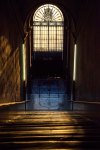
Golden light bathes one of four common staircases leading to the Chapel of St. Lawrence, immediately adjacent to the Jerusalem Steps.
For Catholic Pilgrims who wish to visit the Jerusalem Steps but are unable to climb them on their knees, four adjacent staircases provide an easier ascent with the assistance of stair rails.
Late afternoon light illuminates a common staircase adjacent to the Scala Sancta (Holy Steps) said to be the steps Jesus stood upon before Pontius Pilate.
The King of Kings was born in a manger some 2000 years ago. On that night, a new star appeared in the heavens. The star gave light to those seeking the Light of the World. From that first Christmas night, lights have been used to symbolize the Christ Child. Sometime during the renaissance, candles were placed on trees at Christmas to symbolize the birth of the Babe in Bethlehem.
Many now bring lighted trees inside their homes during the Christmas season, yet, the purpose and meaning of the lighted symbol has been forgotten or lost entirely. Lights may adorn the festive holiday trees during the Christmas season and then be put away or, eventually burn out completely, yet, the Candle of the Christ Child, the Light of the World still burns brightly.
For those in need, for those who mourn, for those who feel alone, or lost, or forgotten, the Light of the World still shines during this Christmas season and throughout the year. Perhaps the lights of the season, the symbols of Christmas, may remind us of his gift and bring our footsteps closer to him through the kindness of our actions whenever and wherever we may find them still burning.
Glory to God in the highest, and on earth peace, good will toward men. –Luke 2:14
The prayers of those in need rise from this tree shaped candelabra at a Catholic Cathedral in Rome.
The reflecting pool on Temple Square tells the story of Christmas in twinkling lights.
“I will honour Christmas in my heart, and try to keep it all the year. I will live in the Past, the Present, and the Future. The Spirits of all Three shall strive within me. I will not shut out the lessons that they teach!”
― Charles Dickens, A Christmas Carol
This past year I have been in nearly 30 countries. I have stood on every continent (except Antarctica–maybe next year :). I have been away from home more than I like, more than I should. I have been running as fast as I can, working as hard as I am able. I have had some marvelous, even miraculous experiences. Yet, I would choose to stay home, surrounded by family and friends.
Surrounded by thousands of twinkling Christmas lights, the Salt Lake Temple stands as a symbol of faith and hope to more than 15 million Latter-day Saints (Mormons) across the world.
And so it was that our family gathered for Thanksgiving. It was a joyous experience to be with those whom I know love me. The day after Thanksgiving, we all went to Salt Lake City to see the Christmas Lights on Temple Square. As is typical when our family gathers, we were in a hurry. It was cold. We ran through Temple Square trying not to lose each other, trying not to knock anyone over, trying not to lose the Grandparents who wanted to keep up but who kept stopping to enjoy the sights. I barely had time to pull out my camera.
Red, a color of Christmas, lights for the Star of Bethlehem, stone for the Rock of Salvation.
After getting separated, and reconnecting (thanks to cell phones), we ended up at my son and daughter-in-laws apartment drinking egg nog and playing “Apples to Apples.” It was fun, and exhausting, in a good way.
When we returned home, I realized, again, that the joy of Christmas is in keeping it in our hearts and our homes. I do believe there is a gift, given freely by him, whom we celebrate, that lights our homes, our hearts and our minds, even in the darkest of times.
“And it was always said of him, that he knew how to keep Christmas well, if any man alive possessed the knowledge. May that be truly said of us, and all of us! And so, as Tiny Tim observed, God bless Us, Every One!”
― Charles Dickens, A Christmas Carol
Soaring above Temple Square, a star shaped display points across time to the Babe of Bethlehem, born in a manger.
Corregated metal, cardboard, canvas and the ever-present barbed wire makeup the materials of most houses in the township.
“What was it like,” I asked him, “apartheid?”
Joseph. Our driver. He was a large, jolly man in his fifties. He had dark chocolate skin with curly, salt and pepper hair. He looked at me and the smile lines around his eyes wrinkled.
He laughed.
Without education, children growing up in the township face limited opportunities.
Not just a chuckle. Joseph burst into a full belly laugh. He had lived through it. He was 33 when Apartheid ended.
“You would not believe me if I told you,” Joseph said. “My children do not believe me when I tell them.”
At first, I didn’t understand why he was laughing. I didn’t understand how he could laugh. It wasn’t funny.
“Tell me.”
“No.”
I pressed him.
“It was horrible. No freedom. No jobs. We had no hope.”
In the Township, 3000 people share three water taps.
He drove us to a township just outside of Johannesburg.
“Three-thousand people live here,” he said. “They have no running water. They have no electricity. They share three water taps. They share 20 portable toilets.”
He introduced me to the people. They were quick to smile, but their eyes were guarded, skeptical. I couldn’t understand their words. Joseph translated.
Who is this white face with a camera?
With no running water or sanitation, 3000 people share 20 portapotties throughout the township.
Why does he take our picture?
Joseph told them I was there to tell their story. I was. They were glad. They were friendly. They wanted me to understand. They wanted others to know of their struggle. For them, Apartheid was not over.
I was stunned. They had so little.
“Why?”
Child rearing falls to the women. The traditional wrap makes an excellent baby backpack.
“Get in the car.” Joseph said it was time to go. It was no longer safe.
I got in the car.
Joseph did not laugh.
“Apartheid ended in 1994. Those were difficult times. I lost my best friend to a gunshot. I cannot describe…I will not describe those days. We did not know if we would live or die. We had no hope.”
“But, Apartheid has been over for 27 years.”
“These people believe the government will take care of them. They think the government will educate them.”
“Will they?”
Joseph laughed. “They say apartheid is over. It is not. But at least now we have hope.”
Having recently visited South Africa, I was reflecting on my experiences there in light of Nelson Mandela’s passing. A courageous, inspiring leader, he had an influence on a people, a country and a world. As I met the people, talked with them, broke bread with them, photographed them, Nelson Mandela had an influence on me. I came to admire his commitment to moral principles which elevate the human condition. I found, in Johannesburg, a complex and complicated city with contrasts not entirely in keeping with Nelson Mandela’s vision for how things ought to be. In other parts of the country these contrasts were even more apparent. Things are not how they should be. Yet, I also saw hope, commitment, energy and progress. I’m sure Nelson Mandela didn’t accomplish all he hoped to accomplish in his long and influential life. Yet, his vision took root. His commitment and perseverance inspired others. Nelson Mandela made a difference. South Africa made a significant impression on me well beyond the images I took.
Completed in 2003 at a price of 38 million rand, the Nelson Mandela Bridge was conceived as a means of bridging two disparate parts of Johannesburg in the hopes of revitalizing the inner city.
Jacaranda trees bloom in spectacular beauty on a residential street in Johannesburg, South Africa.
Johannesburg, South Africa is a colorful and diverse city. We stopped for a moment to capture the sunset over this neighborhood.
Powerlines traverse the horizon as a Soweto resident walks home along the dirt path leading to the Township.
Life in the township has improved, but can still be difficult. Growing crops provides an income supplement and food for a family.
Bungee jumpers and base jumpers get their adrenalin rush by leaping from the platform bridge between the Two Towers.
Johannesburg is a beautiful city. From a distance and height, the views are stunning.
Afternoon and evening storms, sometimes violent, roll in over Johannesburg, relieving the city of heat and humidity.
Johannesburg downtown business district is clean, modern and growing.
With seating for 37,500, Johannesburg stadium is home to the Orlando Pirates Football Club and the Golden Lions Rugby Union.
Johannesburg has a modern well developed infrastructure.
Alexandra Township, or Alex, is part of Johannesburg, South Africa, and is one of the poorest urban areas in the country.
As this woman crossed the bridge, I asked if I could take her picture. When I showed her the picture, she laughed and laughed. She couldn’t understand why I wanted her picture.
While economic opportunities abound in Johannesburg, the unemployment rate among blacks is astronomically high, somewhere near 32%.
They seemed like bars, the wooden frames. To keep me out or hold him in, I did not know which was more damning.
Ever present and visible on nearly every home, regardless of class, barbed wire speaks to the underlying crime and lack of security every resident of Joburg faces.
In Alex, unemployment, drugs, gangs and violence are part of the landscape of daily life. Barbed wire is one small means of protecting the children.
Water is a scarce commodity in many parts of the world. Clean water is even more precious. In Alex, dirty water is plentiful.
This building was abandoned. Now squatters take up residence as the building slowly decays.
Storm brewing over the Valley of 1,000 Hills.
The legendary tree of life thrives in Africa.
A thirsty African elephant takes a healthy drink from his own personal well.
Friendly rhinoceros grazing on the Mala Mala Game Reserve.
Leopard finishing a meal of Impala at the Mala Mala Game Reserve, South Africa.
If you’ve listened to selected shorts on PRI for awhile (http://www.wnyc.org/shows/shorts/), you’ve heard Roger Kellaway’s, “Come to the Meadow.” The music is lyrical, whimsical and evocative. I can see wildflowers and feel the wind in his composition. The music, for me, paints a spring song in the meadow, evergreen and blooming. Yet, when I found myself in The Meadows on a cold November morning, I was captivated by the patterns, shapes and lines of summer grasses, now glowing golden in the glorious morning light. Come to the meadow with me, on a glorious autumn morning. Bring Roger Kellaway, if you can. There are more seasons in the meadow than you might expect.
On the banks of a mountain stream, meadow grasses glow in the golden light of early morning.
Meadow grasses dip to drink from the mountain stream.
A small stream snakes through the golden meadow.
Shape, pattern, line and light emerge through a high-dynamic-range look into the meadow.
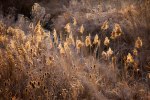
Bowing before the inevitability of winter, crested wheat grass form a congregation of followers praying for new life.
The Meadows glow in autumn’s golden morning light.
Waiting for wind, meadow weeds cling to seeds that will carry life to new meadows and pastures.
In the meadow, autumn wind and snow have not yet buried the seeds of spring growth.
Laden with the remnants of summer growth, autumn’s remnants glow with future promise.
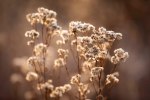
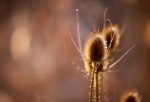
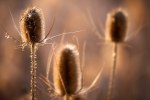
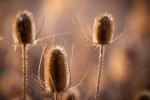
Near the end of fall, the meadow grass, Common Teasel, is not so common.
Fall portends sleep and death, yet, in the meadow, among the teasel, there is hope for renewal.
Paradise is not so far away from meadow teasel in late autumn.
Crested wheat grass form patterns of light among a variety of meadow grasses.
Golden lights illuminates shapes and patterns in the meadow.
Crested wheat grass mixes with other meadow grasses.
On the banks of a meadow stream, fall leaves cover smooth stones.
Evergreen endures while deciduous trees prepare for winter.
Fall leaves cover the ground before winter snow buries the leaves.
I could see him, standing there. He didn’t have far to go.
I waved. He didn’t.
“Come on,” I shouted.
He didn’t move.
I could see his face, from a distance.
“What’s wrong?”
Then I heard it growl. Behind a tree. It barked.
I walked faster.
It barked again. Advancing.
I could see it.
The dog was small. To me. I smiled, not realizing I had been holding my breath.
It posed no threat.
But he was small, too. So small. To him, the dog was big. Huge. Terrible. Mean.
I stopped.
The menace was between us. He would not pass.
He looked at me for help and shuddered. I could see his eyes well up. The sob was uncontrollable, involuntary.
“It’s just a puppy,” I said. “He won’t bite. You can make it.”
He didn’t know that. He wasn’t sure. To him the threat was real.
Sharp teeth, bared.
I closed the gap. I challenged the foe. I vanquished the demon.
He held my hand as we walked home. His little body shook with sobs he tried to hide. We didn’t speak.
That night, with some time and distance, he told me about the monster. It blocked his way. It threatened his life. It captured him and wouldn’t let him go. It was too big, too scary.
I saved his life. He said.
I laughed and held him on my lap. I sang a song to help him sleep and went to bed.
I dreamed.
The way was dark. The threat was real. I could not pass. I felt the violent sob shake my soul.
You can make it. I heard him say.
I wasn’t sure. I didn’t know. I couldn’t see the way.





























 They're Calling To Me