My Leopard photo was selected for the 21st annual World of the Wild Art show at Utah’s Hogle Zoo. If you are interested in seeing the exhibit it runs from February 1 through March 16.
Utah’s Hogle Zoo
2600 E. Sunnyside Avenue
Salt Lake City, Utah 84108
Leopard finishing a meal of Impala at the Mala Mala Game Reserve, South Africa.
Light, shadow, shape and texture, overwhelmingly surrounded by the sights of Rome. Architecture, people, ruins and religion. I am not so naive as to think that I could see it all in one day. Having spent one day in Rome, I am not so naive as to think that I could see it all in a week, or a month, or even a year. Rome has been around for a very long time. It would take a long time to see it, really see it. It would take longer to photograph it, really capture the essence of it. Yet, while I was there, with my camera, I stopped time. I saw things others have photographed with much more skill than I possess. Yet, I saw things others may have missed. This series is the first of four galleries of stuff–cool stuff–you may see in rome, if you are looking.
The sun was getting low, the shadows long. My own shadow was unrecognizable; however, this shadow reminded me of me, when my head gets too big.
I may have an obsession with cobblestones, their shape, their patterns and the stories they could tell of who passed their way.
Perhaps the same stones, yet viewed a different way–even the streets in Rome resonate with antiquity.
Unveiled in 1667 in the Piazza della Minerva, the Elephant and Obelisk was a commissioned work designed by Bernini outside the Santa Marie Sopra Minerva church and is the shortest of eleven Egyptian Obelisks in Rome.
In the Piazza della Minerva in Rome, round steel balls and barriers with chains protect the Elephant and Obelisk by Bernini.
Barriers, shadows and chains bar entry to the piazza.
Even with 2000 years of decay, Roman architecture still makes a bold statement, influencing much of the world.
Whether you are looking in or looking out, the setting sun emphasizes the color, contrast and climb to the sacred heights of the Eternal City.
Throughout Rome on many buildings and walls, if you look up, you can see detailed artwork of the Virgin Mary and the Baby Jesus, usually illuminated by a lamp or lantern.
Another example of framed wall art in the style of the Masters. This portrait of Mary is about 15 feet off the ground. Someone has to maintain the flower box.
The stone shelf was empty, except for the bottle which was also empty.
Not sure which language or which beverage, but the empty bottle could be a metaphor for the effects of alcohol.
On a narrow Roman side street, this drinking fountain or water spout had so much character I couldn’t resist the photo. What I couldn’t figure out was if the water was safe for drinking.
From this angle, the water looks pretty good. Throughout Rome, there are water fountains readily available so the weary wanderer should never get dehydrated.
From this angle I’m not sure I would drink the water. However, the fountain is still pretty interesting.
At one point in the distant past it may have been a carriage outside the door, and, the barber may have offered blood letting. Somehow I found my way into the shot.
Brass doorknockers may aid admission through these old oak doors.
This stone lion stands guard on a bridge cross the Tiber River near the Castel Saint’Angelo.
We wandered down a narrow alley in the bleached out color of night, looking for the Spanish Steps. The Graphiti said we were lost.
In one man’s Roman trash, you might find a designer zebra stripped suitcase for a reasonable price.
Cell phone service in Rome was frustratingly inconsistent. When we saw this icon for the local provider, I realized why. Their phones are rotary.
I thought, since it is New Years Eve, I would post a photo gallery of shots from some of the places I’ve been around the world. Sort of a “Best of” gallery from previous posts. I’ve been only blogging since August, so I have yet to post shots from everywhere I’ve been. And, I have yet to even start posting video from all of these places. That is what 2014 is for. Resolution 🙂
The world is a big, beautiful place, filled with interesting people, amazing sights, random coincidences and occasional tender mercies. I have been blessed to travel. I have been blessed to make friends on every continent. I hope to keep the friends I have made and make more as time goes by. However, my greatest blessings are found at home, with a warm fire, a good meal and my family, who love me.
I hope you enjoy the photographs. Happy New Year.
Soweto Towers could be one of the coolest places in the world to bungee and base jump.
Corregated metal, cardboard, canvas and the ever-present barbed wire makeup the materials of most houses in the township.
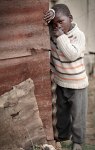
Without education, children growing up in the township face limited opportunities.
The Village Elder gave us permission to take a picture, but, the women of the village, the mothers wouldn’t come out of their huts to be in the shot.
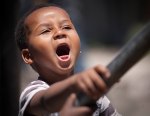
A child can find pure joy amidst the most challenging of circumstances.
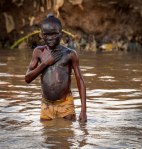
The secret to such smooth, smooth skin could be found in the mud of Lubumbashi River.
Working with root fibers in Yamoransah village, Ghana.
When I tried to take her picture, she would hide her face and then laugh. When I showed her pictures of her friends, she opened up enough to let take this photo.
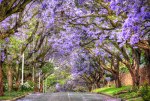
Jacaranda trees bloom in spectacular beauty on a residential street in Johannesburg, South Africa.
The legendary tree of life thrives in Africa.
A thirsty African elephant takes a healthy drink from his own personal well.
Leopard finishing a meal of Impala at the Mala Mala Game Reserve, South Africa.
One of the greatest achievements of Roman Engineering and Architecture, the Roman Colosseum is still the largest amphitheater in the world.
Kneeling in the attitude of penitent prayer, this woman remains still for hours, hoping her prayers will be answered with coins in her cup.
Late afternoon light illuminates a common staircase adjacent to the Scala Sancta (Holy Steps) said to be the steps Jesus stood upon before Pontius Pilate.
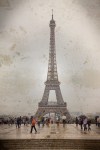
A vintage rainy day in Paris.
KIngs and Courtiers still bask in the lavish extravagance of the Château de Versailles.
Evergreen soldiers await the command to march on the Palace.
One of the islands on the Seine, near the birthplace of Paris.
A woman rests from her burdens.
Can you say Da Vinci Code?
The heart of the ancient Inca Empire
Scones and Smiles, she’ll warm your heart with both.
Shape, pattern, line and light emerge through a high-dynamic-range look into the meadow.
Early morning sun shines on Lone Peak, Wasatch Mountains, Utah.
Temple Square in Salt Lake City is the headquarters of The Church of Jesus Christ of Latter-day Saints. Construction of the Salt Lake Temple began in 1847 and took nearly 40 years to complete. The Temple, surrounded by thousands of twinkling Christmas lights, stands as a symbol of faith and hope to more than 15 million Latter-day Saints (Mormons) across the world.
If you’ve listened to selected shorts on PRI for awhile (http://www.wnyc.org/shows/shorts/), you’ve heard Roger Kellaway’s, “Come to the Meadow.” The music is lyrical, whimsical and evocative. I can see wildflowers and feel the wind in his composition. The music, for me, paints a spring song in the meadow, evergreen and blooming. Yet, when I found myself in The Meadows on a cold November morning, I was captivated by the patterns, shapes and lines of summer grasses, now glowing golden in the glorious morning light. Come to the meadow with me, on a glorious autumn morning. Bring Roger Kellaway, if you can. There are more seasons in the meadow than you might expect.
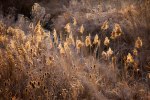
On the banks of a mountain stream, meadow grasses glow in the golden light of early morning.
Meadow grasses dip to drink from the mountain stream.
A small stream snakes through the golden meadow.
Shape, pattern, line and light emerge through a high-dynamic-range look into the meadow.
Bowing before the inevitability of winter, crested wheat grass form a congregation of followers praying for new life.
The Meadows glow in autumn’s golden morning light.
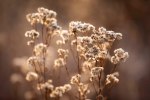
Waiting for wind, meadow weeds cling to seeds that will carry life to new meadows and pastures.
In the meadow, autumn wind and snow have not yet buried the seeds of spring growth.
Laden with the remnants of summer growth, autumn’s remnants glow with future promise.
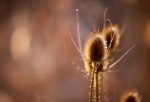
Near the end of fall, the meadow grass, Common Teasel, is not so common.
Fall portends sleep and death, yet, in the meadow, among the teasel, there is hope for renewal.
Paradise is not so far away from meadow teasel in late autumn.
Crested wheat grass form patterns of light among a variety of meadow grasses.
Golden lights illuminates shapes and patterns in the meadow.
Crested wheat grass mixes with other meadow grasses.
On the banks of a meadow stream, fall leaves cover smooth stones.
Evergreen endures while deciduous trees prepare for winter.
Fall leaves cover the ground before winter snow buries the leaves.
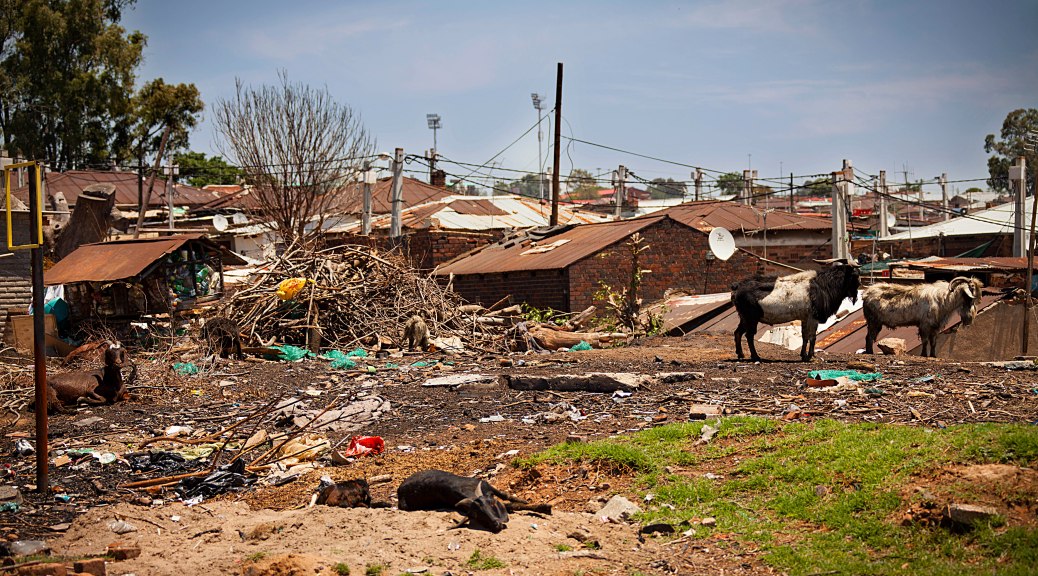
It was noon and the sun was directly overhead. Hot. And Humid. There wasn’t a cloud in the sky. The hard light cast hard shadows. Appropriate–in Alex, life is hard. One of the poorest urban areas in South Africa, Alexandra Township is part of Johannesburg and is home to nearly 200,000 souls. Many do not have running water, or proper sanitation. Many live in informal shacks made of corrugated metal or cinderblock brick. Unemployment is high. Drugs are rampant and gangs compete with law for control. When I entered Alex to take pictures, I stood out dramatically–white on black, with hard shadows. The harsh light was not what I would have chosen for good pictures. Nevertheless, the time of day was a metaphor for life in Alex–harsh and hard. In this post I wanted to show some of the conditions inside. Partial understanding comes through knowing. Tomorrow I’ll show their faces.
Alexandra Township, or Alex, is part of Johannesburg, South Africa, and is one of the poorest urban areas in the country.
Water is a scarce commodity in many parts of the world. Clean water is even more precious. In Alex, dirty water is plentiful.
Livestock co-exist with people among the trash of a struggling human population.
Goats will eat just about anything, including trash. In Alex, they have plenty to choose from.
Alexandra township is located on the banks of the Jukskei River.
Among the discards of a declining industrial population, art will still find expression.
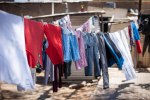
Harsh light heightens the contrast of color as clothing dries in a heavy breeze.
In Alex, dirt, dust and heat are oppressive. Clean laundry is never really clean. But, it is always drying.
This building was abandoned. Now squatters take up residence as the building slowly decays.
Drying laundry reflects the inner life of this former tenement building, now the home to countless squatters.
In Alex, even newer buildings are breaking down.
A dominant feature of home construction in Alex, corrugated metal is used for roofs and walls.
Broken, or baking, bricks are plentiful in the neighborhoods of Alex.
In Alex, if your truck won’t run, it may still work for yard decoration.
Red dust coats everything in Alex, including the cars. However, in spite of the arrow, I could never find the actual location of the car wash.
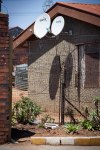
No matter how much or how little one might possess, entertainment is no longer a want, but a need, as illustrated in this upscale home in Alex.
There are numerous cross-cultural references to the Tree of Life. I don’t know the actual name for this tree, but the symmetrical shape reminded me of drawings I’ve seen from many parts of the world. In a land teeming with such diversity of life, the symbolism was not hard to find. Africa is an amazing place, bursting with life, much of it tenuous. This tree, thriving amongst the harshness, was an inspiring reminder of my own mortality.
Standing near a watering hole, this African Elephant felt the need to make other arrangements. He dug a hole with his trunk until he struck water. Then, he drank to his heart’s content.
A thirsty African elephant takes a healthy drink from his own personal well.
A Red-billed Oxpecker hitches a ride on a willing Water Buffalo. The Oxpecker lives in a symbiotic relationship with the Water Buffalo. It eats the bugs off the back of the large beast for food. The Water Buffalo benefits from a good cleaning.
A Red-billed Oxpecker eats bugs off the top of the Water Buffalo.
We came upon this Leopard eating the hind quarter of an Impala at the base of a tree. Up in the tree, twenty-five feet above us, the gutted and thrashed Impala was still starring at us. The Leopard killed the Impala, gutted it and hauled it up the tree. The Impala weighed almost as much as the Leopard.
He didn’t like us watching him eat so he took his dinner and sauntered into the bush. We followed. He decided to ignore us and sat down to finish his meal. When he was done, he just sat there, resting.
Leopard finishing a meal of Impala at the Mala Mala Game Reserve, South Africa.
People, places, things–I think I’ve pretty much covered it. This will be my last post from Paris–a collection of random stuff–shapes, lines, designs, stuff–much of it transportation related–since we were running, literally, around the city. The city of lights, the city of love, good food, great architecture, interesting people–Paris has it all. Some may wonder, then, why shoot this–stuff? Storytelling, for me, begins with the wide shot and gets more specific. I am fascinated by shapes, lines, interesting stuff. It is so easy to miss the interesting stuff. It is even more difficult to see the interesting stuff, in interesting ways. The story of my visit to Paris–a story I will never forget–and, one I hope to visit again–concludes with the specific, yet random–from my treasure box of stuff.
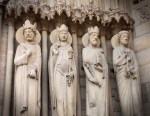
Notre Dame Cathedral is rich in sacred imagery carved with intricate detail.
Intricate carved stone detail above the entrance to the cathedral of Notre Dame.
Intricate design and inlaid gold accent gates at the Château du Louvre.
Intricate design and inlaid gold accent gates at the Château du Louvre.
Blue granite monuments, symbols of eternity, perfection and earth, near Paris monuments.
Red granite monuments, symbols of eternity, perfection and earth, near Paris monuments.
One of the friendliest gargoyles I’ve seen.
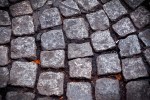
Aging cobblestones on an aging Paris street.
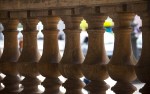
Stone Newels cast interesting shadows at the Château du Louvre.
Rusted chains, set in stone, convey a sense of decaying permanence.
Angels, even dusty ones, above your threshold must be a good thing–right?
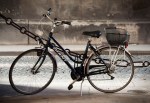
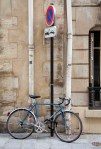
Tie up your bike, or your boat.
Nice house, nice ride.
They’re everywhere–a great, green method of transportation.
Perhaps a place to chain your bike?
They’re everywhere.
My reflection in the cracked mirror of a Vespa.
In spite of the ubiquitous logo network, my cellphone reception in Paris was terrible.
Interesting designs and colors on the covering above our outdoor cafe stop.
Bright colors, garish perhaps, liven the underground realms of the Paris Metro.
Which line, which direction? This is how you find your way on the Paris Metro
Ropes and horn cleats on the docks of the River Seine.
On a bridge above the Seine, trash finds a home on the seldom seen and unnoticed river side of the wall.
Fall leaves adorn the streets of Paris in September.




































 They're Calling To Me