After the storm, Uncle watched as we played with his brother’s family.
We’d been invited to visit a family in the town of Lubumbashi. The journey was rugged. It had rained. Roads were muddy. Occasional lighting flashed and thunder cracked. Their home was modest, brick and stone. Uncle sat outside watching us pull up in our Land Rover. He did not speak English. We could not communicate in words. As we played with his brother’s children, Uncle remained in his chair, following us with his eyes, perspiration glistening his skin in the moist afternoon heat. When I asked about his story, they simply said, “He has seen much.” I showed him my camera, hoping for permission to take his picture.
Our eyes met. He nodded, but did not smile.
For more info on my show check out a June 11th article in The Spectrum.
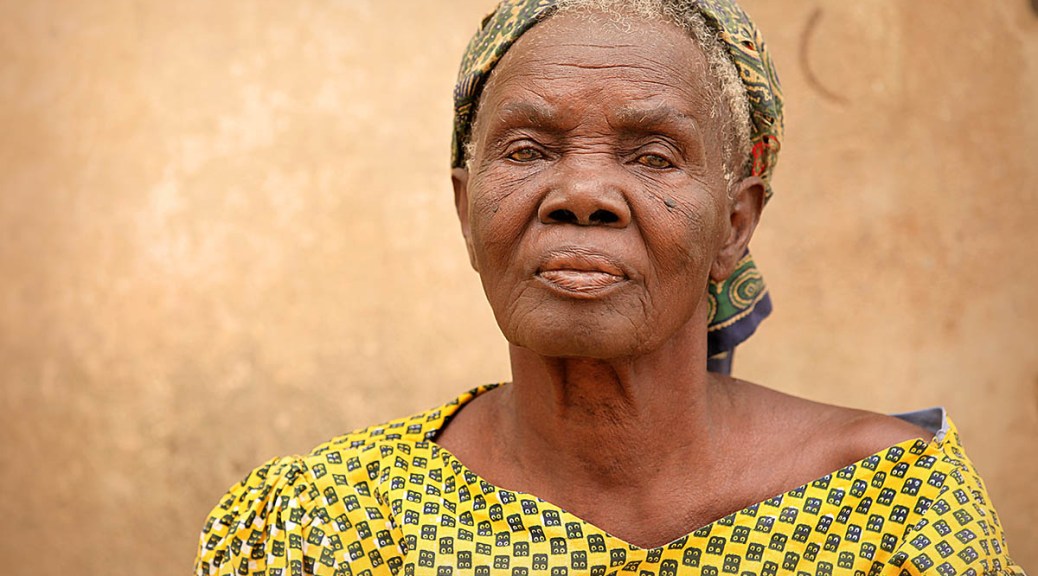
Though she is old, she leads–perhaps because she is old.
Three hours from Accra and the roads got really rough. We had been driving into the bush and each mile seemed to take a millennium. The more we drove, the farther back in time we went. As we drove into the village of Yamoransah, young girls stared at us as they mashed roots for food. Young children surrounded us, posing for our cameras. The village Matriarch watched our approach, proudly. She did not speak English. There was no need. This was her village.
As we approached, she slowly rose and the children quieted. She did not need her walking stick for authority. Her voice was soft and quiet, yet the young mothers gathered their children and went inside.
Somewhere, in the delicate balance of past and present, she kept her village safe. The old ways still worked, although her eyes were growing dim.
Teenagers charged their cell phones at a generator near the village well.
For more info on my show check out a June 11th article in The Spectrum.
It can be painful when a pilgrimage is not all it was supposed to be.
Tired, alone and far from home, the Eternal City, can be an unforgiving place. Religious tradition may favor the Catholics in Rome, yet Islam entertains apocryphal hope for ultimate victory in the struggle for religious domination. Global politics and religious ideology lose their import when you are sick and hungry. With no place left to go, a bridge over the Tiber River is as good a place as any to end a pilgrimage.
For more info on my show check out a June 11th article in The Spectrum.
It was raining in Paris that morning as I sought shelter beneath the balustrades and terraces of the Louvre Palace. My timing was off. The museum was closed. I was not alone in my disappointment as I watched a woman trudge beneath our columned shelter and sit, wearily, against stone. She was not present with the host of tourists surrounding this space. She looked beyond, focused on something my eyes could not see. Trouble, sadness, sorrow, suffering. I could not know. Yet, in her eyes I could see the reflection of ghosts in Paris. On this day, I would not see the Mona Lisa smile.
For more info on my show check out a June 11th article in The Spectrum.
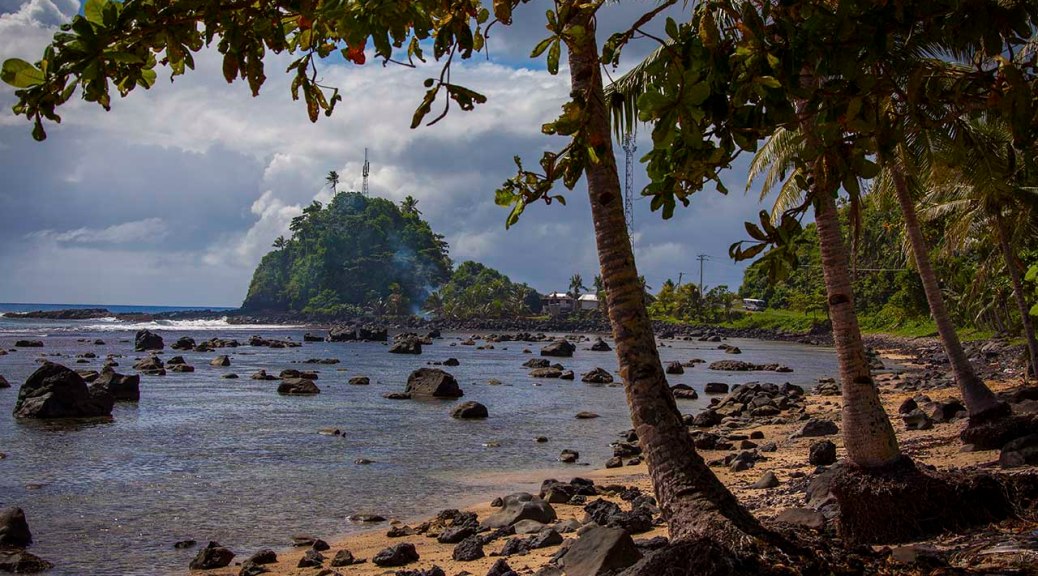
A calm before the storm settles over the bay on Upolu, Samoa.
The air was heavy, oppressive. Dark clouds rose above a steel horizon. The humid air made it hard to breathe. I took a shower that morning, but never dried off, still dripping. The clear ocean called to me, but a storm was coming. I could feel it in the quiet slowness. No one was in the water. Most of the locals were resting on mats in their fales. A Samoan home, or fale, is mostly built with bamboo and thatch, allowing maximum airflow. The air was not moving.
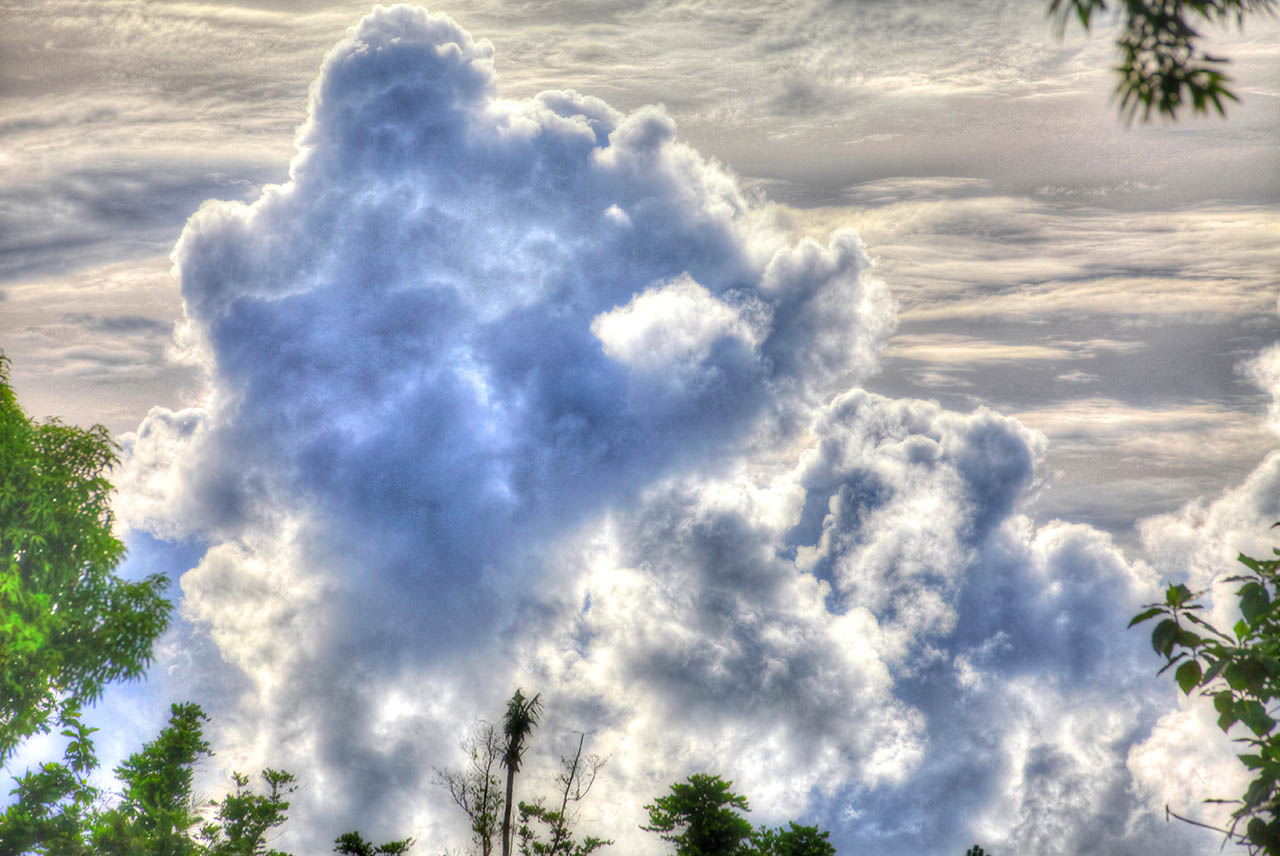
Storm clouds bloom over Upolu Island, Samoa.
I watched them come, the dark clouds. The weight of wet-hot weather pushing, pushing down on my chest, holding me in place as I watched them grow, the clouds. I wanted to lie down and not move, sleep until the dark dream dispersed.
When the rains came, it was sudden, as if the ocean moved onshore. The sky was water. The air was liquid. The drops were waves, crashing to earth. The sound rose and swelled, drowning all other sounds.
Then, quiet.
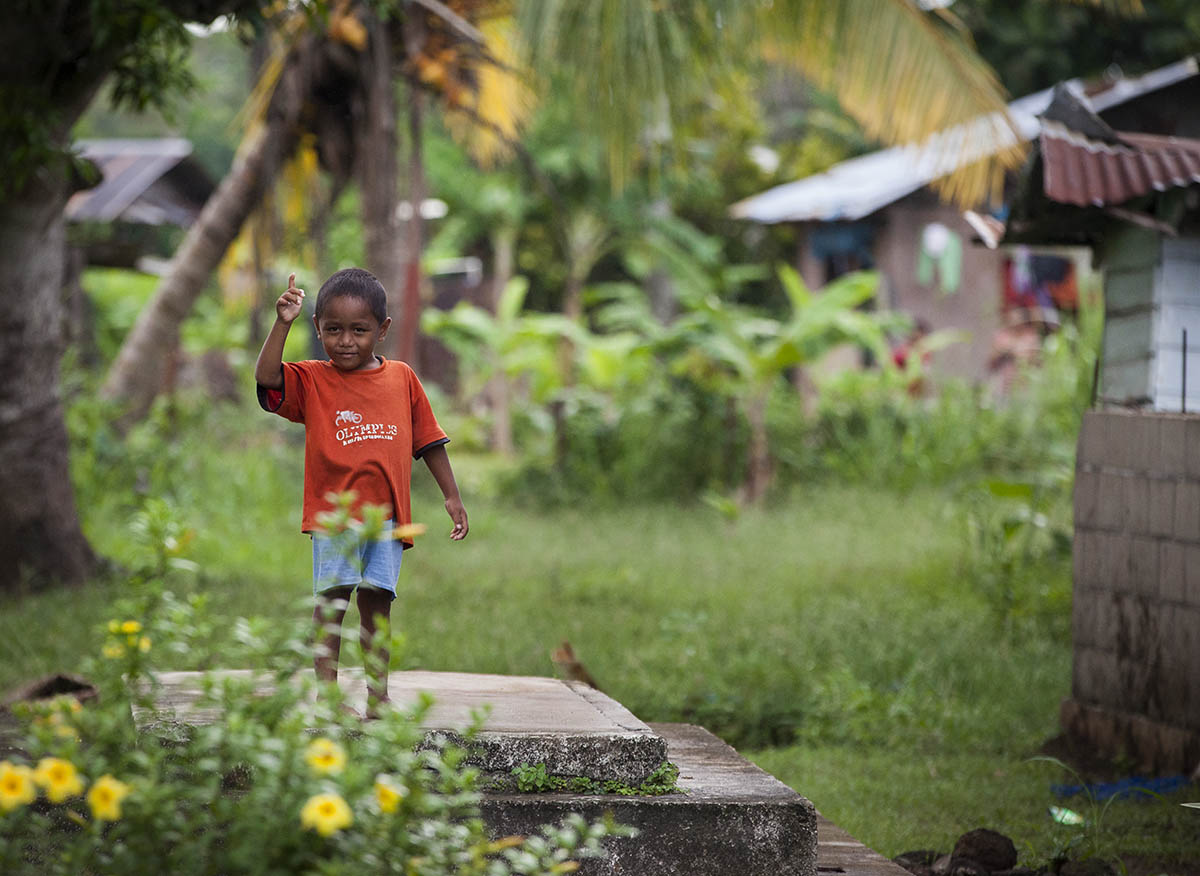
Talofa lava–a young boy waves in greeting.
The rains ceased. Clouds moved on, a pleasant breeze chasing them. The sun emerged from hiding. Children were the first to awaken, laughing and playing in streams winding back to sea. Steam rose above fluorescent flora. The world sparkled with brilliant color.
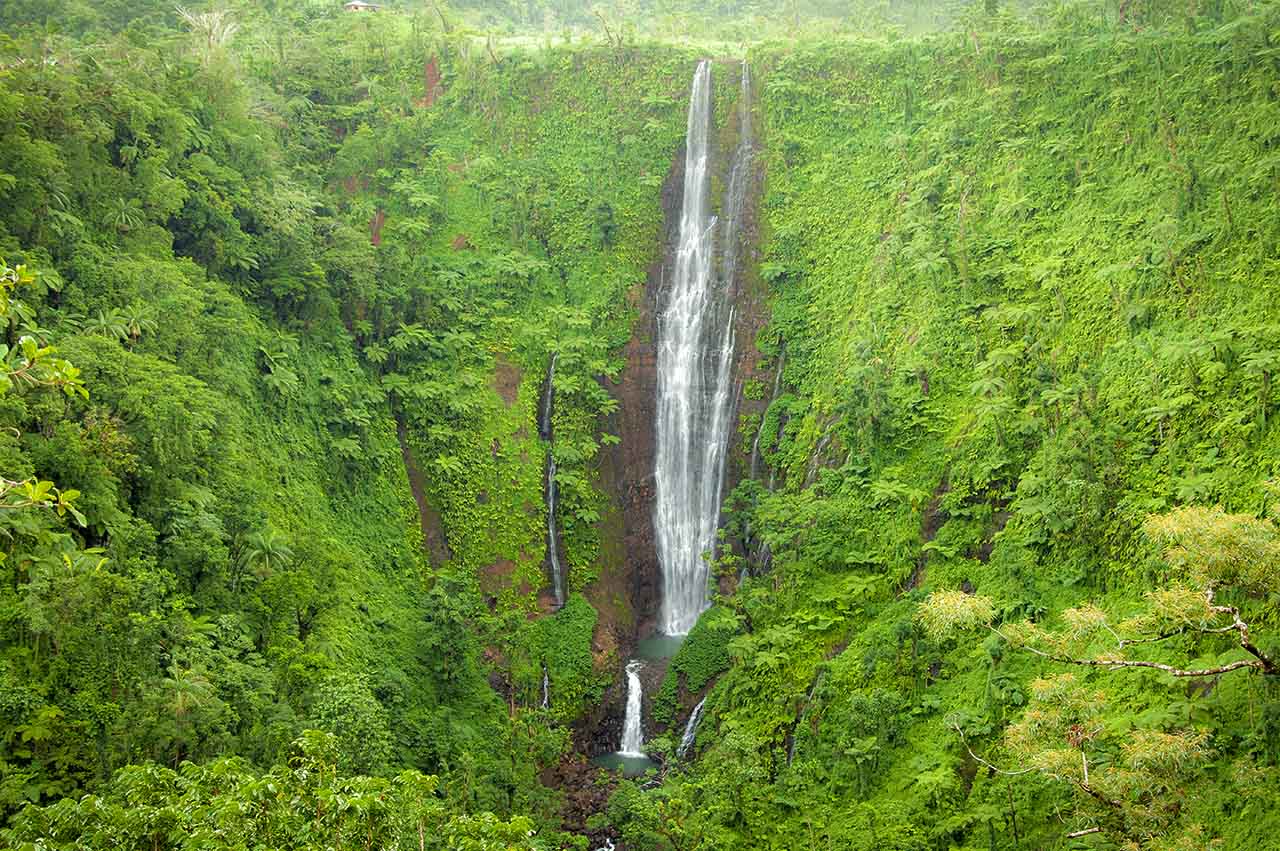
Rain and mountains make for spectacular waterfalls in Samoa.
I witnessed a transformation of the island, Samoa, sea, sky, land. What I didn’t see, couldn’t see then, was the change Samoa wrought in my heart, not until I left that place.
I have not been back, yet, I long to return, to reconcile the man I am with man I hope to be, in paradise.
Namu’a Island, Samoa, just a short swim away.
Gentle breezes blow through swaying palms in Samoan paradise.
Rain and mountains make for spectacular waterfalls in Samoa.
A woman walks home on a rural Samoan road.
Waterfalls and rain are never far away on Upolu, Samoa.
Samoan wildflower
Samoan wildflower
Samoan wildflower
Giant electric green ferns thrive in the Samoan forests.
Samoan wildflower
Lush vegetation of many colors grow in the Samoan jungle.
Lush vegetation of many colors grow in the Samoan jungle.
Tapa cloth designs create a homey warmth in the Samoan fale.
Rain drops bead on leafy green vegetation in Samoa.
Beautiful flowers grow wild in Samoa.
Coconuts grow wild on Upolu, Samoa.
A boy watches warily, before taking a swim in the ocean.
Samoan boy.
Samoan children pose for the camera.
Brothers, Samoa.
Fresh from a swim in the sea, a Samoan boy leans against his house.
Talofa lava–a young boy waves in greeting.
Coral reefs protect palm-lined sandy beaches on the island of Upolu, Samoa.
Lava flows bear witness to Samoa’s violent geological past.
Drift wood and lava adorn many Samoan beaches.
Put your feet in Samoan sand. You may not want to take them out.
Bench seats.
Perhaps in need of paint, the wooden canoe is still seaworthy.
Samoan canoe.
Hand carved canoes point the way for Samoan mariners.
Samoan Canoes.
Palm trees protect aging canoes from the sun and rain.
Known for centuries as great mariners, Samoan still navigate the seas in wooden canoes.
Peaceful bay in Upolu, Samoa.
Lava Lavas and sandals are formal attire in Samoa.
Storm clouds bloom over Upolu Island, Samoa.
Trade winds push fluffy clouds over coconut palms in Samoa.
A calm before the storm settles over the bay on Upolu, Samoa.
When I showed him this picture, he laughed and laughed. So did his buddies.
Just before sunset, we stopped on the banks of the Lubumbashi river in the DR Congo. Families were washing clothes and bathing in the river. It was hot, and humid. When I pulled out my camera, I was surrounded by children, laughing, dancing and posing. We did not speak the same language, in words. But, the joy of the children was contagious. In a land so different from my own, we shared a laugh, and a smile.
For more info on my show check out a June 11th article in The Spectrum.
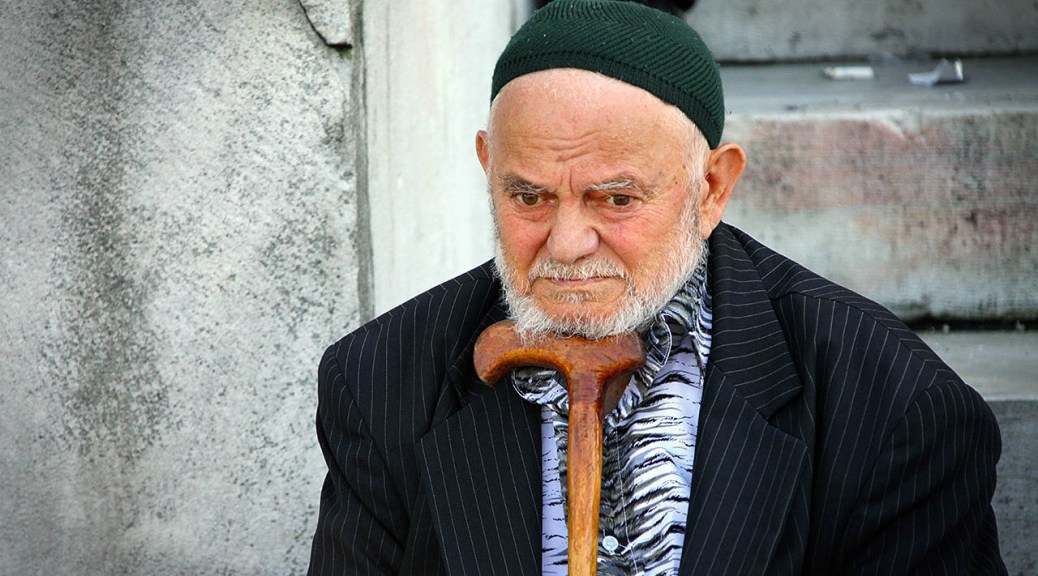
A wooden cane and stone steps provide respite when carrying the weight of the world in Istanbul.
He sat on steps outside a mosque in Istanbul, worry lines carving canyons in his forehead. Perhaps the proximity to God, and a wooden cane will keep the weight of worldly cares from crushing him. Perhaps a silent prayer will reach to heaven or a moment in tower shadows will heal his heart. I can not say.
Crowds ascended sacred steps as the old man remained.
I watched with him as long as I could, hoping for relief, praying that, perhaps, he, too, could go home.
For more info on my show check out a June 11th article in The Spectrum.
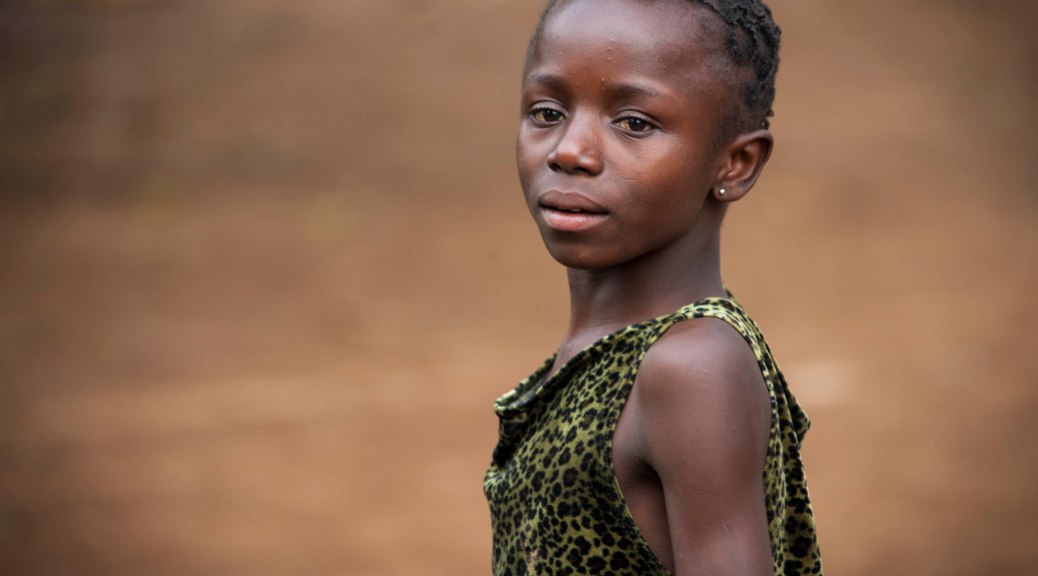
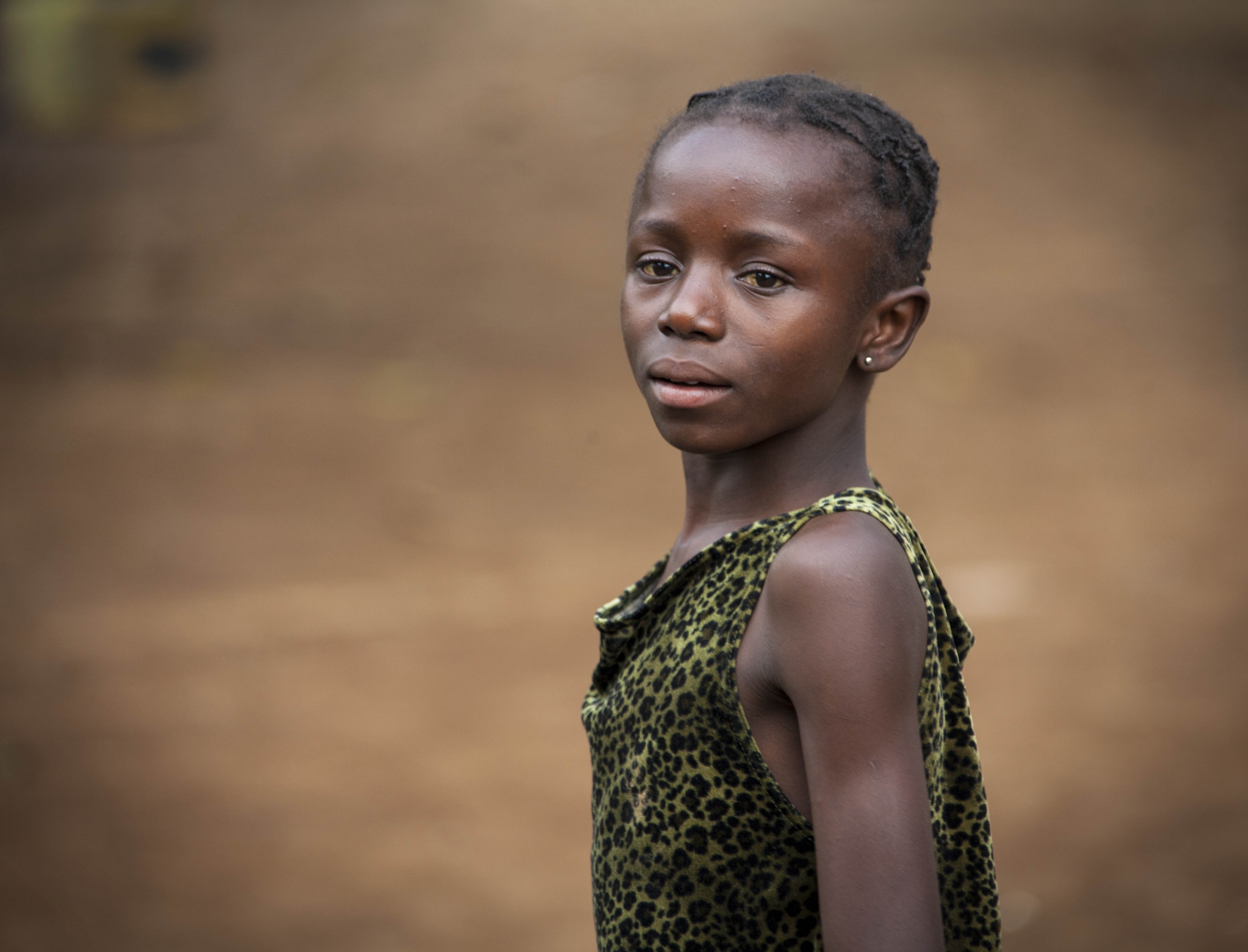
Stylishly dressed in a green leopard print, this young girl has just one dress.
She was taller than the boys she played with. Her green leopard-print dress fluttered in a breeze of fluid motion. A dirt street in Kinshasa had become an earthy futbol stadium; I, the paparazzi, she, the star. When she kicked a well-worn ball through a makeshift goal, her teammates cheered. As the game resumed, she turned and looked at me, wary. Our eyes met. She seemed to hold a world of experience behind questioning eyes. I smiled. A small boy kicked the ball. I took her picture. She darted away, leopard dress clinging to her graceful form.
For more info on my show check out a June 11th article in The Spectrum.
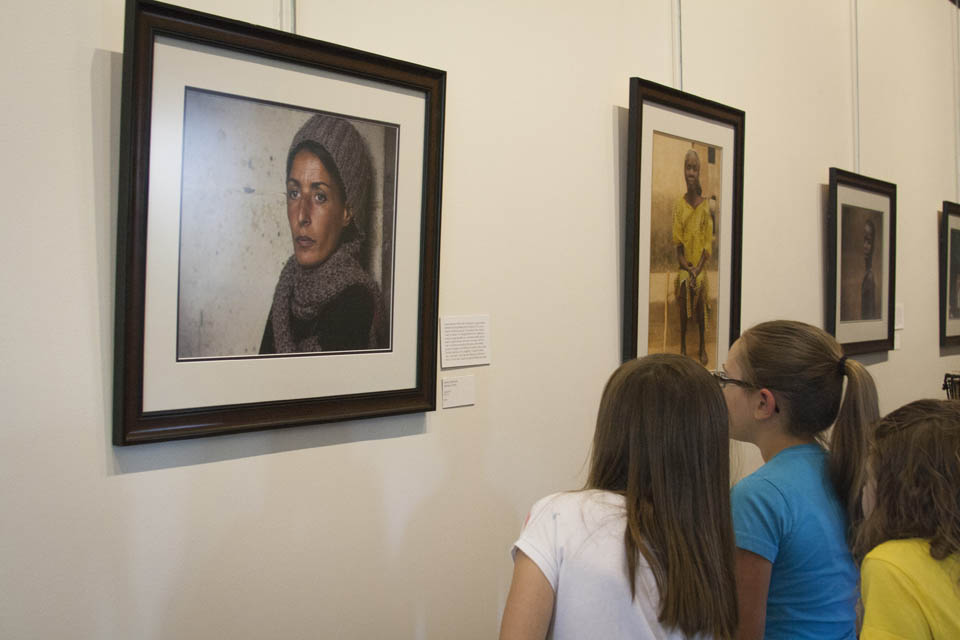
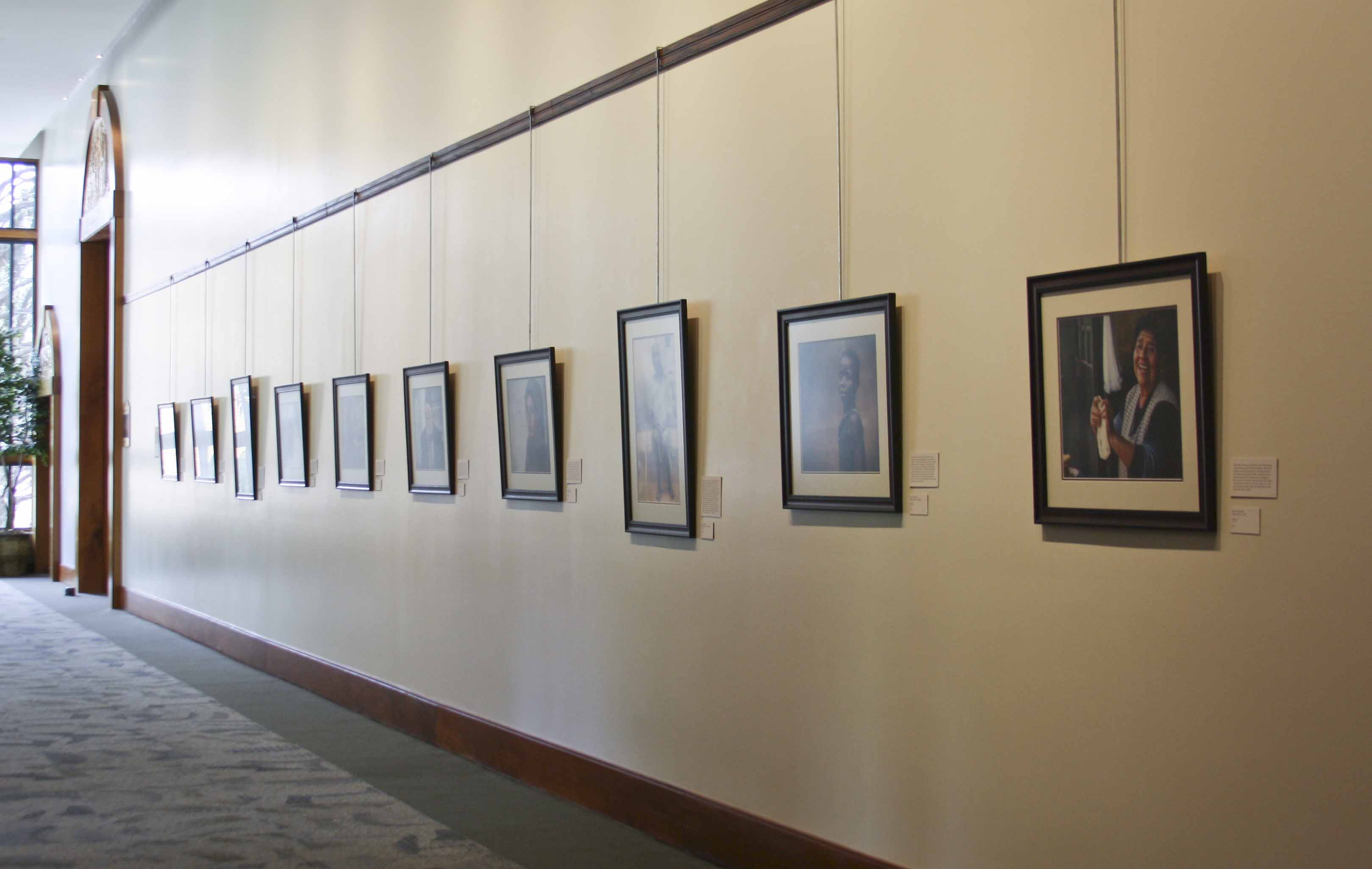
For any passing through Cedar City this summer, please stop by and visit the 2015 Cedar City Art Walk. I’ve been invited to participate in the Gallery Show. My show is in the Southern Utah University Hunter Conference Center. I have ten 16×20 prints on display. The show runs from June 5 through August 31. Another good reason to see the show is that it runs concurrently with the world famous Utah Shakespeare Festival.
Some of these photos have been posted on my blog and some have not. I’ll be posting one a week for the next ten weeks of the show along with a very short story about the photo.
Here’s a bit of info on the Festival:
The Art Walk is a collaboration between artists, business, and galleries in the community. Final Fridays, June 26, July 31 and August 28 from 5:00 – 8:00 pm are gallery strolls that offer participants a change to engage with talented visual artists from Utah. Some locations will have musical performances and receptions.
James Dalrymple’s Photography on display at the SUU Hunter Conference Center for the Cedar City Art Walk.
Before my eyes could adjust, the smell was upon me–pungent and powerful. My eyes were stinging with scents I did not recognize. Inside the ancient spice bazaar, crowds were swirling, the noise was disorienting. Shop keepers smiled and nodded at weathered women. Women scowled back in negotiation. Shouting began as a wave that crested and broke over exotic shops in the tidal rhythm of the ancient spice trade.
Islam is the most populous major religion in Turkey. Although no longer required, many women still wear the burka in public.
I raised my camera to capture the confusion and she froze. Perhaps she thought her burka made her invisible. Amidst the current of chaos she had been invisible. I would not have noticed the androgynous shape among the many shapes in motion. It was in that moment of pause that our eyes met. Her eyes were all I could see. Sights and sounds and people were swirling about us and I could see her eyes.
Sadness.
I think that’s what I felt. I’m not sure if that’s what I saw.
She raised her hand, translucent against her robes and I took the photograph. We stood there for moments, centuries swirling before us. I could not see beneath her coverings. I had no desire to violate tradition. But in that moment, in her eyes, I could sense a depth of inner life, hidden beneath the burka; hopes, dreams, struggles, desires, hiding in the Misir Carsisi Spice Bazaar, in Istanbul.
Where do you think the White Witch of Narnia got hers?
In the Spice Bazaar in Istanbul I believe it just might be the best quality in the world.
Scented with the aroma of jasmen blossoms, jasmen tea has been a popular drink in the Middle East and Asia for thousands of years.
Sausages anyone?
Saffron, caviar, spices, and of course, sausage.
Before Pfizer began selling little blue pills, the Spice Bazaar was your best source for spicing up your love life.
Your best source for love potion number 9.
Not one of the things I knew Iran was famous for.
The Spice Bazaar, or Misir Carsisi also means Egyptian Bazaar. Misir in Turkish is also mistranslated to mean corn bazaar, although, outside the bazaar you can find some delicious barbecued corn.
Fresh, hot and seasoned with exotic spices, don’t miss the barbecued corn from the street vendors outside the Spice Bazaar.
Islam is the most populous major religion in Turkey. Although no longer required, many women still wear the burka in public.
41.00527028.976960
LikeLoading...
I hear them, the voices in my head. They tell me stories. I can see them with my heart.















 They're Calling To Me