The reflecting pool on Temple Square tells the story of Christmas in twinkling lights.
“I will honour Christmas in my heart, and try to keep it all the year. I will live in the Past, the Present, and the Future. The Spirits of all Three shall strive within me. I will not shut out the lessons that they teach!”
― Charles Dickens, A Christmas Carol
This past year I have been in nearly 30 countries. I have stood on every continent (except Antarctica–maybe next year :). I have been away from home more than I like, more than I should. I have been running as fast as I can, working as hard as I am able. I have had some marvelous, even miraculous experiences. Yet, I would choose to stay home, surrounded by family and friends.
Surrounded by thousands of twinkling Christmas lights, the Salt Lake Temple stands as a symbol of faith and hope to more than 15 million Latter-day Saints (Mormons) across the world.
And so it was that our family gathered for Thanksgiving. It was a joyous experience to be with those whom I know love me. The day after Thanksgiving, we all went to Salt Lake City to see the Christmas Lights on Temple Square. As is typical when our family gathers, we were in a hurry. It was cold. We ran through Temple Square trying not to lose each other, trying not to knock anyone over, trying not to lose the Grandparents who wanted to keep up but who kept stopping to enjoy the sights. I barely had time to pull out my camera.
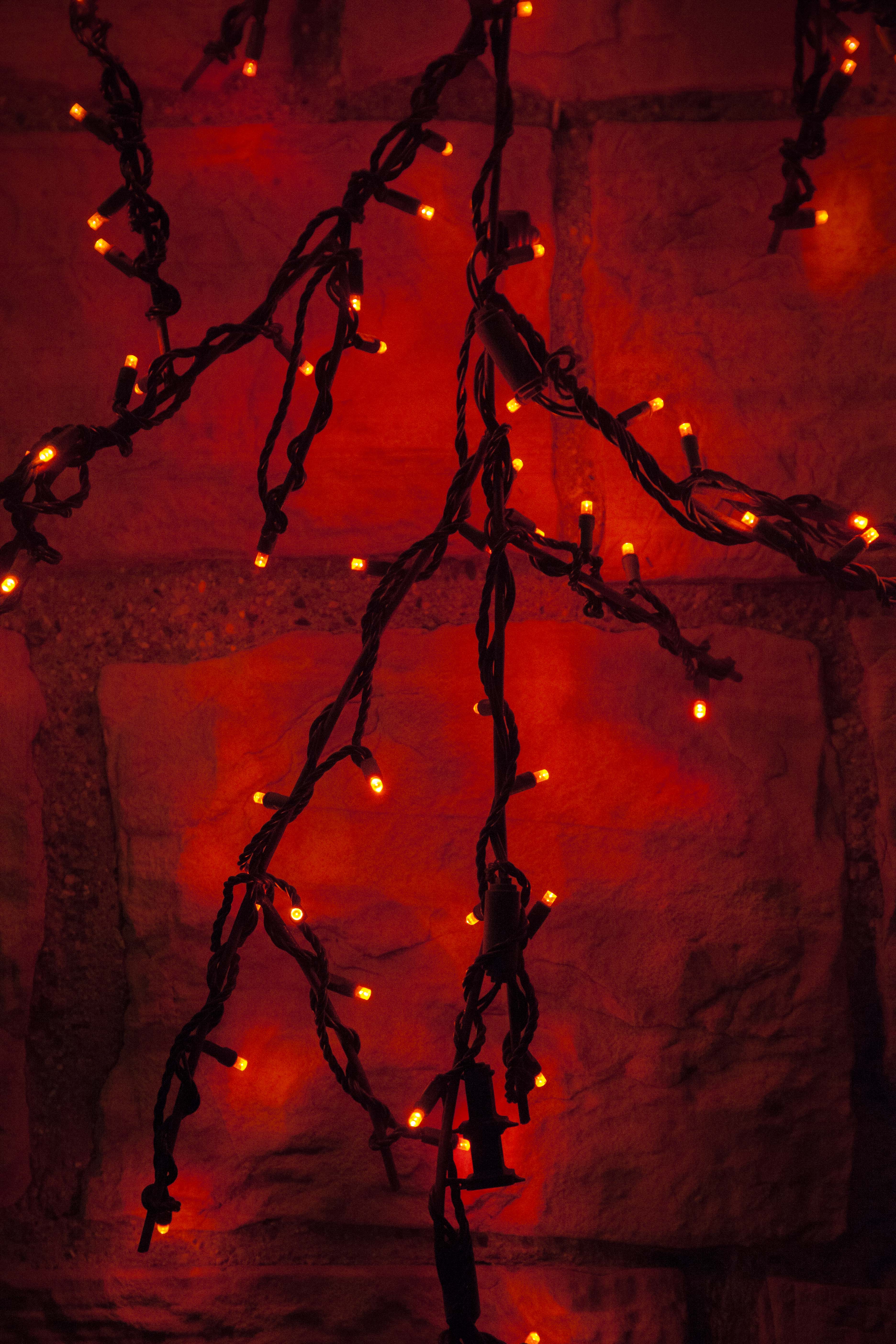
Red, a color of Christmas, lights for the Star of Bethlehem, stone for the Rock of Salvation.
After getting separated, and reconnecting (thanks to cell phones), we ended up at my son and daughter-in-laws apartment drinking egg nog and playing “Apples to Apples.” It was fun, and exhausting, in a good way.
When we returned home, I realized, again, that the joy of Christmas is in keeping it in our hearts and our homes. I do believe there is a gift, given freely by him, whom we celebrate, that lights our homes, our hearts and our minds, even in the darkest of times.
“And it was always said of him, that he knew how to keep Christmas well, if any man alive possessed the knowledge. May that be truly said of us, and all of us! And so, as Tiny Tim observed, God bless Us, Every One!”
― Charles Dickens, A Christmas Carol
Soaring above Temple Square, a star shaped display points across time to the Babe of Bethlehem, born in a manger.
Having recently visited South Africa, I was reflecting on my experiences there in light of Nelson Mandela’s passing. A courageous, inspiring leader, he had an influence on a people, a country and a world. As I met the people, talked with them, broke bread with them, photographed them, Nelson Mandela had an influence on me. I came to admire his commitment to moral principles which elevate the human condition. I found, in Johannesburg, a complex and complicated city with contrasts not entirely in keeping with Nelson Mandela’s vision for how things ought to be. In other parts of the country these contrasts were even more apparent. Things are not how they should be. Yet, I also saw hope, commitment, energy and progress. I’m sure Nelson Mandela didn’t accomplish all he hoped to accomplish in his long and influential life. Yet, his vision took root. His commitment and perseverance inspired others. Nelson Mandela made a difference. South Africa made a significant impression on me well beyond the images I took.
Completed in 2003 at a price of 38 million rand, the Nelson Mandela Bridge was conceived as a means of bridging two disparate parts of Johannesburg in the hopes of revitalizing the inner city.
Jacaranda trees bloom in spectacular beauty on a residential street in Johannesburg, South Africa.
Johannesburg, South Africa is a colorful and diverse city. We stopped for a moment to capture the sunset over this neighborhood.
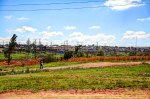
Powerlines traverse the horizon as a Soweto resident walks home along the dirt path leading to the Township.
Life in the township has improved, but can still be difficult. Growing crops provides an income supplement and food for a family.
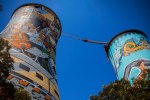
Bungee jumpers and base jumpers get their adrenalin rush by leaping from the platform bridge between the Two Towers.
Johannesburg is a beautiful city. From a distance and height, the views are stunning.
Afternoon and evening storms, sometimes violent, roll in over Johannesburg, relieving the city of heat and humidity.
Johannesburg downtown business district is clean, modern and growing.
With seating for 37,500, Johannesburg stadium is home to the Orlando Pirates Football Club and the Golden Lions Rugby Union.
Johannesburg has a modern well developed infrastructure.
Alexandra Township, or Alex, is part of Johannesburg, South Africa, and is one of the poorest urban areas in the country.
As this woman crossed the bridge, I asked if I could take her picture. When I showed her the picture, she laughed and laughed. She couldn’t understand why I wanted her picture.
While economic opportunities abound in Johannesburg, the unemployment rate among blacks is astronomically high, somewhere near 32%.
They seemed like bars, the wooden frames. To keep me out or hold him in, I did not know which was more damning.
Ever present and visible on nearly every home, regardless of class, barbed wire speaks to the underlying crime and lack of security every resident of Joburg faces.
In Alex, unemployment, drugs, gangs and violence are part of the landscape of daily life. Barbed wire is one small means of protecting the children.
Water is a scarce commodity in many parts of the world. Clean water is even more precious. In Alex, dirty water is plentiful.
This building was abandoned. Now squatters take up residence as the building slowly decays.
Storm brewing over the Valley of 1,000 Hills.
The legendary tree of life thrives in Africa.
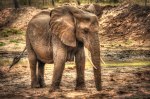
A thirsty African elephant takes a healthy drink from his own personal well.
Friendly rhinoceros grazing on the Mala Mala Game Reserve.
Leopard finishing a meal of Impala at the Mala Mala Game Reserve, South Africa.
If you’ve listened to selected shorts on PRI for awhile (http://www.wnyc.org/shows/shorts/), you’ve heard Roger Kellaway’s, “Come to the Meadow.” The music is lyrical, whimsical and evocative. I can see wildflowers and feel the wind in his composition. The music, for me, paints a spring song in the meadow, evergreen and blooming. Yet, when I found myself in The Meadows on a cold November morning, I was captivated by the patterns, shapes and lines of summer grasses, now glowing golden in the glorious morning light. Come to the meadow with me, on a glorious autumn morning. Bring Roger Kellaway, if you can. There are more seasons in the meadow than you might expect.
On the banks of a mountain stream, meadow grasses glow in the golden light of early morning.
Meadow grasses dip to drink from the mountain stream.
A small stream snakes through the golden meadow.
Shape, pattern, line and light emerge through a high-dynamic-range look into the meadow.
Bowing before the inevitability of winter, crested wheat grass form a congregation of followers praying for new life.
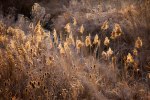
The Meadows glow in autumn’s golden morning light.
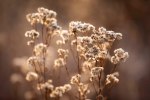
Waiting for wind, meadow weeds cling to seeds that will carry life to new meadows and pastures.
In the meadow, autumn wind and snow have not yet buried the seeds of spring growth.
Laden with the remnants of summer growth, autumn’s remnants glow with future promise.
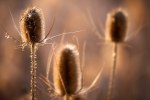
Near the end of fall, the meadow grass, Common Teasel, is not so common.
Fall portends sleep and death, yet, in the meadow, among the teasel, there is hope for renewal.
Paradise is not so far away from meadow teasel in late autumn.
Crested wheat grass form patterns of light among a variety of meadow grasses.
Golden lights illuminates shapes and patterns in the meadow.
Crested wheat grass mixes with other meadow grasses.
On the banks of a meadow stream, fall leaves cover smooth stones.
Evergreen endures while deciduous trees prepare for winter.
Fall leaves cover the ground before winter snow buries the leaves.
I could see him, standing there. He didn’t have far to go.
I waved. He didn’t.
“Come on,” I shouted.
He didn’t move.
I could see his face, from a distance.
“What’s wrong?”
Then I heard it growl. Behind a tree. It barked.
I walked faster.
It barked again. Advancing.
I could see it.
The dog was small. To me. I smiled, not realizing I had been holding my breath.
It posed no threat.
But he was small, too. So small. To him, the dog was big. Huge. Terrible. Mean.
I stopped.
The menace was between us. He would not pass.
He looked at me for help and shuddered. I could see his eyes well up. The sob was uncontrollable, involuntary.
“It’s just a puppy,” I said. “He won’t bite. You can make it.”
He didn’t know that. He wasn’t sure. To him the threat was real.
Sharp teeth, bared.
I closed the gap. I challenged the foe. I vanquished the demon.
He held my hand as we walked home. His little body shook with sobs he tried to hide. We didn’t speak.
That night, with some time and distance, he told me about the monster. It blocked his way. It threatened his life. It captured him and wouldn’t let him go. It was too big, too scary.
I saved his life. He said.
I laughed and held him on my lap. I sang a song to help him sleep and went to bed.
I dreamed.
The way was dark. The threat was real. I could not pass. I felt the violent sob shake my soul.
You can make it. I heard him say.
I wasn’t sure. I didn’t know. I couldn’t see the way.
7:45 am, 28 degrees, Thanksgiving morning, 5K run. I was the designated photographer as three of my children dragged me out of bed to take pictures of them running. Annual tradition. Most all of my family converged on our home for Thanksgiving. With so many people staying in our home, there hasn’t been much sleeping going on. I stayed up way too late. I was tired. I was cold. Then, the sun came up. The light hit the mountain tops and I thought about all the places I have been in the world this year, how many frequent flyer miles I have accrued, how many Marriott points I have, and, I was glad. Glad to be home. Home where the cold November mornings chill my breath. Home where the sun shines more often than not and the summer sun shines late and long. Home where my pillow fits my head and my bed has an indentation just my size. Home where my children come for Sunday dinners. Home where the sun rises over the Wasatch mountains to the east and Lone Peak Mountain lies north. Home, where I’m never lost and always loved. For these things and more I give thanks.
Early morning sun shines on Lone Peak, Wasatch Mountains, Utah.
They say Africa changes you. If you’ve been to Africa, spent time there, visited the people, you will understand. I’ve been to Africa four times. This was my first time in Lubumbashi. I was surprised. My own stereotypes were both reinforced and shattered. In Lubumbashi, a fragile peace hung over the city as oppressive as the heat and humidity, infusing a cultural angst almost as heavy . I was the outsider. I was different. The children called me “Muzungu”, white face, not a compliment. They smiled and laughed, not with me. My camera lens brought them running, surrounding me, dancing, playing and posing. In their eyes I saw joy, and innocence. The adults looked on, skeptical, questioning, challenging. Their eyes were reserved, hooded, holding back, keeping their stories from me. Many turned away. Some shouted insults. Those that did not were watching to see what I would do with their likeness. I took their pictures. I took them with me. I took them in, a part of me. I will not forget. In their African eyes I will never be the same.
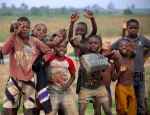
These boys could not resist posing for the camera as we left their homes on the Lubumbashi River.
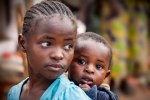
Shouldering many of the parenting responsibilities, a young girl carries her baby brother on her back.
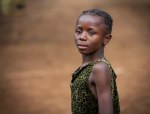
Stylishly dressed in a green leopard print, this young girl has just one dress.
Her dress didn’t fit. The buttons were missing, but, she was still beautiful.
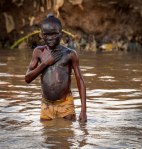
He’d just come out of the river, the mud still on his face. My camera drew him to me, with all his friends. The children called me Muzungu–white face.
When I showed him this picture, he laughed and laughed. So did his buddies.
When I tried to take her picture, she would hide her face and then laugh. When I showed her pictures of her friends, she opened up enough to let take this photo.
They were inseparable. She was delightful. He was protective.
Joyful–I couldn’t help but smile in her presence.
Who was I? Why was I there? I could feel the quiet challenge in his stare.
He wanted me to see his basketball jersey–the LA Lakers. I don’t think he knew anything about basketball, or the Lakers. The Jersey was purple, and it came from America. We had something in common. He was proud of that.
Some NGO dropped used clothing on the banks of the river. The children chose the brightest. Washing in the Lubumbashi river keeps those colors clean and vibrant.
Hurrying to see what the commotion surrounding us was all about, he came out of the river, still dripping.
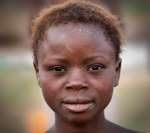
The secret to such smooth, smooth skin could be found in the mud of Lubumbashi River.
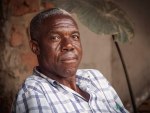
After interviewing his nephew, I held up my camera and pointed toward him. He nodded and I took his picture. His eyes tell stories I’ll never hear.
A popular gathering place for Congolese, the town square has both political and artistic significance for residents of Lubumbashi.
Inconspicuously holding up the wall of his home, a shy young boy waits with his cat.
In one of the nicer homes in Lubumbashi, this kitchen features a few pots and a charcoal barbecue for cooking.
A tangible symbol of the province’s mining industry, Lubumbashi Mountain rises above the farms and villages surrounding the city.
Lubumbashi Mountain is made from the left over materials from the mines surrounding Lubumbashi.
With much practice and good posture, you too can learn to carry your worldly possessions on the top of your head.
It was hot in Lubumbashi, and humid. When the storm finally broke and the rain poured down, it turned the roads to mud.
Thatched roofs and termite mound bricks make up the main ingredients of huts in Bande Village.
The Village Elder gave us permission to take a picture, but, the women of the village, the mothers wouldn’t come out of their huts to be in the shot.
Women and children gather on the banks of the Lubumbashi river to do their laundry.
The Lubumbashi River is the local bathing, swimming and washing place, as well as the source of drinking water and sanitation removal.
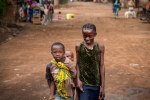
Older sister and two brothers walk through their neighborhood.
Boys watch and wonder what we are doing with our really big cameras.
This boy was full of life and laughter, posing for our cameras.
This boy watched us carefully and curiously, not approaching, yet, not withdrawing.
Unemployment is high in Lubumbashi. Many young men simply can not find work.
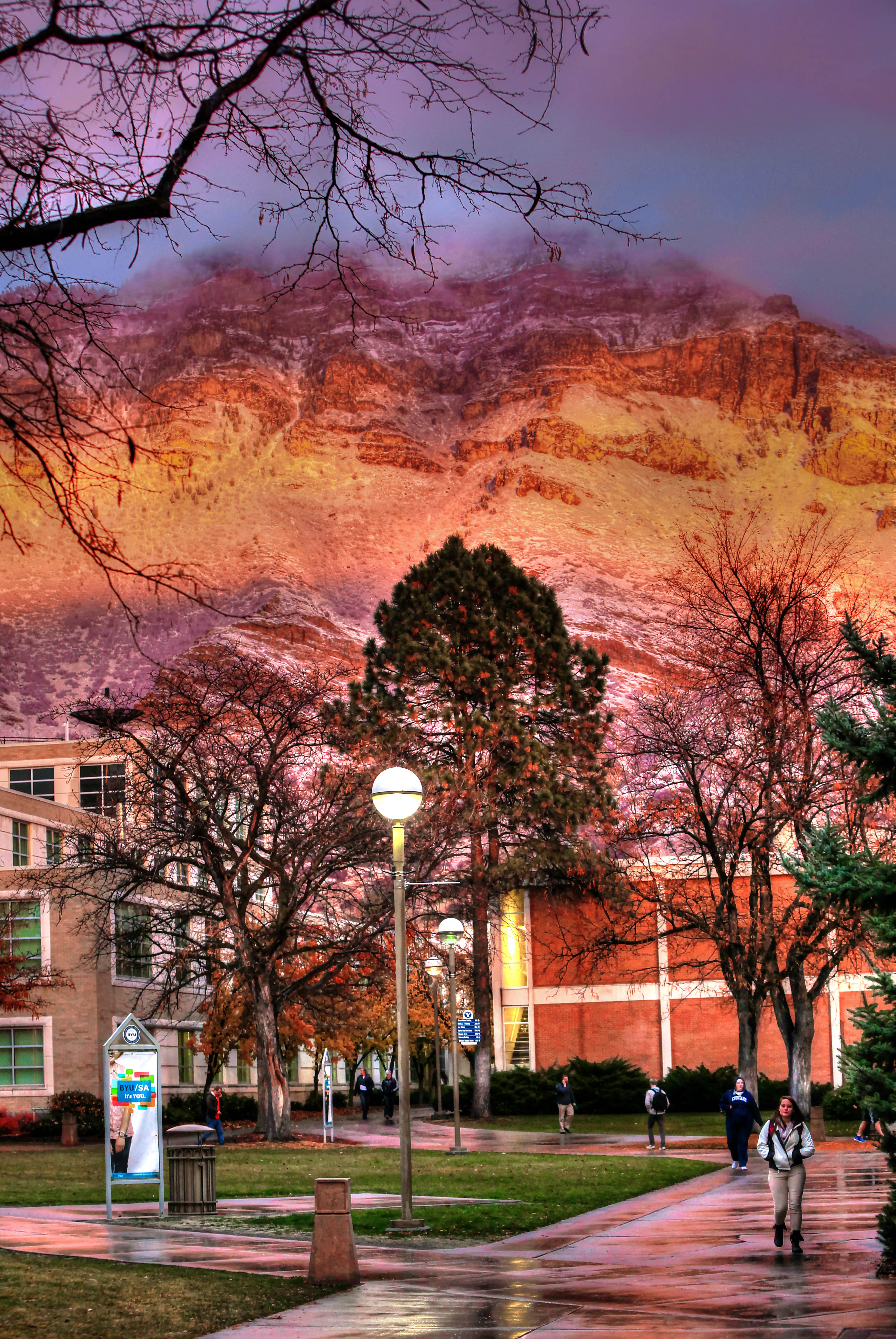
A few nights ago, we were just wrapping a shoot on the campus of Brigham Young University. It had been raining in the valley most of the afternoon and snow had been falling in the higher elevations. Just before the sun set, it dropped below the storm and lit up the mountain. I had just come out of one of the buildings to this scene. I wished I had a better vantage point, a better view. I find, often, that the challenge is not to find a better view, but to see the world where I am in interesting ways. The light changed, the sun dropped below the horizon, it’s brilliance faded. Yet, in that moment I marveled at the beauty. Fortunately I had the presence of mind to take a picture, for the light didn’t last.
The storm was coming. It had been raining. Just before the sun set, it dropped below the clouds and lit up the mountain.
From a distance, Alex looks interesting. The closer you get, the harder it is to see. It can be beautiful, in a flowering African Thorn Bush kind of way. The flowers are pretty–sort of. The thorns can do some real damage. Among the thorns in Alex, there is an energy, growing, changing. In spite of the harshness of conditions, there was a softness in the faces of people. Not all were willing to let me take their picture. Some approached with angry words. Others turned away or hid. But, for those who stood their ground or gave permission, I could see a light, hard light perhaps, in their eyes. The noon-day sun did not make for the best photographs. However, in the hard light of the noon-day sun, when I put on my sunglasses, I could see hope.
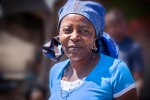
You can meet elderly fashionistas in the most unlikely places.
I wish I knew what they were thinking.
In Alex, as in many parts of the world, the children are resilient–joyful and resilient.
She let me take her picture. She said I could. But I felt a sadness in her cloudy eyes.
She stood her ground. Our worlds were alien, mine to hers and hers to mine. I could feel her questioning, challenging–who are you? What do you want? I had no tools to bridge the gulf between us. When I took her photo and she ran away.
His curiosity got the better of him as he peeked around the corner of a wall. I smiled and he smiled back.
This little baby modestly hides from the camera as his Mother gives him an outdoor bath.
In Alex, unemployment, drugs, gangs and violence are part of the landscape of daily life. Barbed wire is one small means of protecting the children.
When you live in the dirt and the dust fills the air, everyday is wash day in Alex.
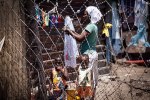
When you have to haul your own water and boil your laundry, it takes creativity to stir your laundry.
Children and Mothers hold hands for guidance, protection and hope throughout the world.
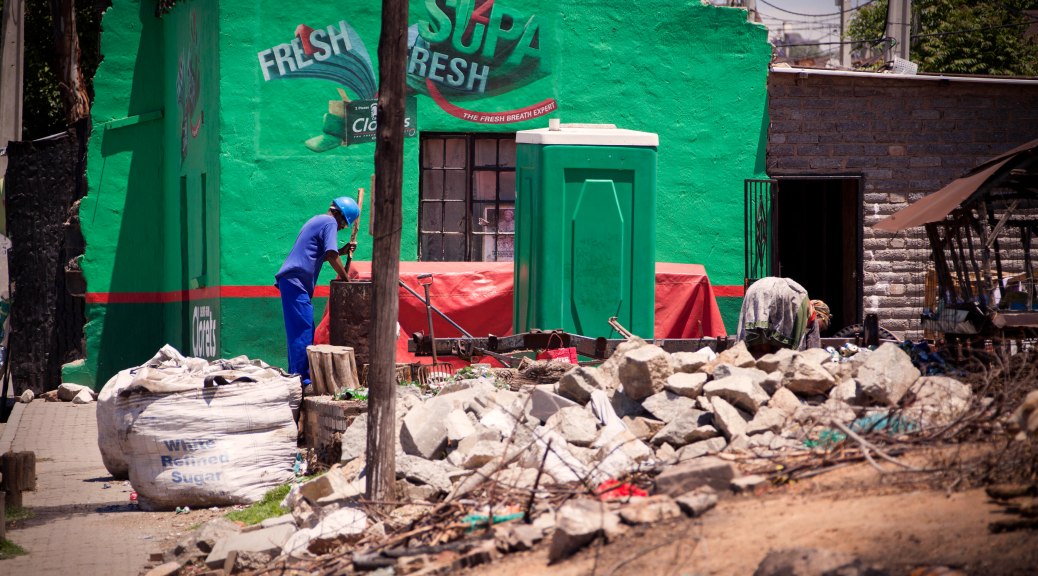
Amidst the rubble of decay, a fresh coat of paint and a little tar for the roof go along way.
A woman selects delicious fresh fruit at the Alexendra Market.
He knew I wasn’t buying. He made no move to draw me in. The wooden frame kept me from approaching. Yet, his gaze was penetrating.
They seemed like bars, the wooden frames. To keep me out or hold him in, I did not know which was more damning.
Two boys were playing in the remains of old construction. When they saw my camera, they stopped and stared, uncertain. Go away, we’re playing. They didn’t say it, but I got the message.
A child can find pure joy amidst the most challenging of circumstances.
I showed him the picture I took. Harmless. On to the adventure.
As this woman crossed the bridge, I asked if I could take her picture. When I showed her the picture, she laughed and laughed. She couldn’t understand why I wanted her picture.
It takes skill, practice and great strength to balance the challenges of life in Alex.
A young man listens to his MP3 player from an elevated place in Alex.
Rarely enough, a snack may be be the only food for that day in Alex.
Dirt and rubble are the playground for this young princess.
Amidst the dirt on the ground and the dust in the air, laundry may dry in the sunshine but it won’t be clean.
As long as a child can smile, there is hope.
Mothers in Alex carry their babies, sometimes on their backs, sometimes in front, the weight of better times for future generations.
This little boy seems to know sorrow beyond his young age.
Red and green, blue and yellow, opposites and contrasts, the story of life in Alex for two sisters.
Official unemployment figures hover around 37%. In Alex, the real figures are much higher as many men have simply given up looking for a job.
A young mother carries her baby to and from the market in Alex.
With a cloth wrap, most women carry their babies on their backs. When the get too big, or it gets too hot, the loose the wrap.
This little boy plays in the dirt while his Mom sells fruit at a stand in the market.
To make a living, many women conduct entrepreneurial street trading enterprises, selling produce and other goods.
Two employed mechanics enjoy their idle time waiting for work.
The barren landscape of Alex Market is both playground and refuge for children of resourceful mothers.
In Alex market, children watch and wait as parents, mostly mothers buy and sell.
It was noon and the sun was directly overhead. Hot. And Humid. There wasn’t a cloud in the sky. The hard light cast hard shadows. Appropriate–in Alex, life is hard. One of the poorest urban areas in South Africa, Alexandra Township is part of Johannesburg and is home to nearly 200,000 souls. Many do not have running water, or proper sanitation. Many live in informal shacks made of corrugated metal or cinderblock brick. Unemployment is high. Drugs are rampant and gangs compete with law for control. When I entered Alex to take pictures, I stood out dramatically–white on black, with hard shadows. The harsh light was not what I would have chosen for good pictures. Nevertheless, the time of day was a metaphor for life in Alex–harsh and hard. In this post I wanted to show some of the conditions inside. Partial understanding comes through knowing. Tomorrow I’ll show their faces.
Alexandra Township, or Alex, is part of Johannesburg, South Africa, and is one of the poorest urban areas in the country.
Water is a scarce commodity in many parts of the world. Clean water is even more precious. In Alex, dirty water is plentiful.
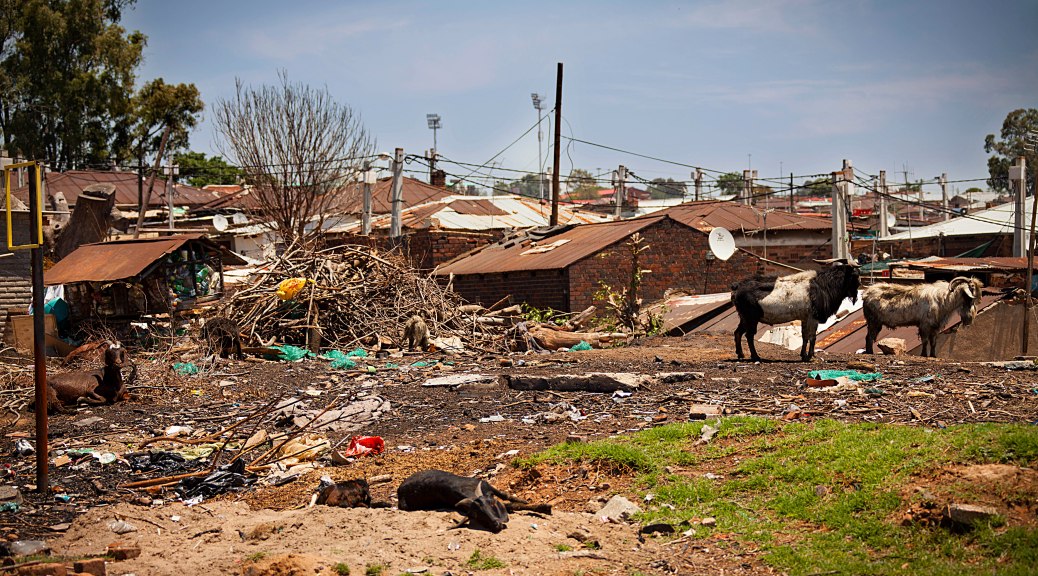
Livestock co-exist with people among the trash of a struggling human population.
Goats will eat just about anything, including trash. In Alex, they have plenty to choose from.
Alexandra township is located on the banks of the Jukskei River.
Among the discards of a declining industrial population, art will still find expression.
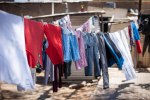
Harsh light heightens the contrast of color as clothing dries in a heavy breeze.
In Alex, dirt, dust and heat are oppressive. Clean laundry is never really clean. But, it is always drying.
This building was abandoned. Now squatters take up residence as the building slowly decays.
Drying laundry reflects the inner life of this former tenement building, now the home to countless squatters.
In Alex, even newer buildings are breaking down.
A dominant feature of home construction in Alex, corrugated metal is used for roofs and walls.
Broken, or baking, bricks are plentiful in the neighborhoods of Alex.
In Alex, if your truck won’t run, it may still work for yard decoration.
Red dust coats everything in Alex, including the cars. However, in spite of the arrow, I could never find the actual location of the car wash.
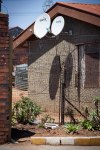
No matter how much or how little one might possess, entertainment is no longer a want, but a need, as illustrated in this upscale home in Alex.
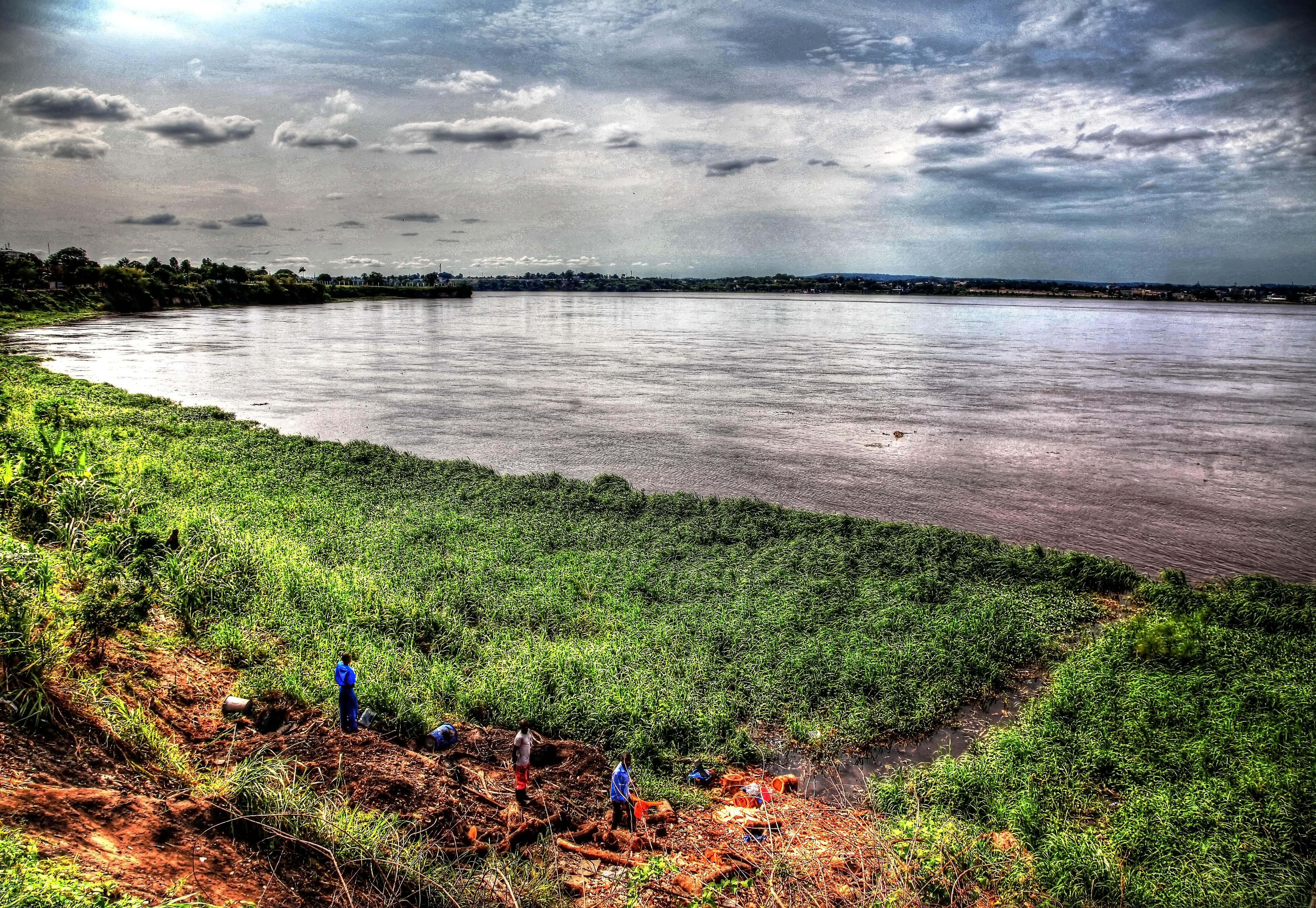
The heat was oppressive. The air was heavy, barely breathable for one not used to the nearly 100% humidity. I was given 5 minutes to take pictures on the banks of the Congo River, in Kinshasa, Democratic Republic of Congo. The Policeman who accompanied me, told me where I could point my camera. If he listened closely, he could hear the shutter click. After three clicks I had to move on.
Young men work the land on the banks of the Congo River, Kinshasa, Democratic Republic of Congo.

















































 They're Calling To Me